Abs Workout at the Gym: How to Get a Strong Core and Visible Abs
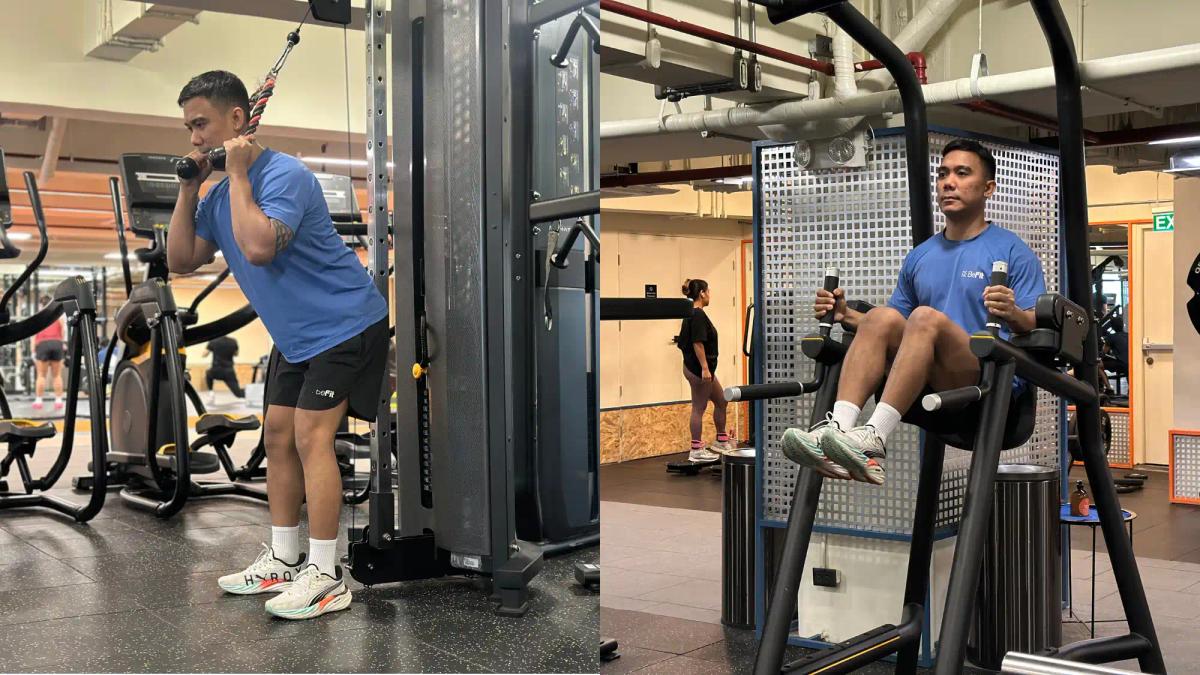
Building a strong core and visible abs requires more than doing hundreds of crunches. The most effective approach combines progressive resistance training, targeted core exercise selection, proper nutrition, and a body-fat level that allows your abdominal muscles to become visible. Just like your chest, back, biceps, or legs, your abdominal muscles can adapt to progressive overload. Instead of relying exclusively on high-repetition bodyweight movements, effective ab workouts should gradually become more challenging by adding resistance, increasing repetitions, improving range of motion, slowing the tempo, or progressing to more difficult exercise variations.
A well-designed abs workout at the gym should also train more than the visible "six-pack." Your core helps stabilize your spine and pelvis, transfer force between your upper and lower body, resist unwanted movement, and maintain good positioning during exercises such as squats, deadlifts, presses, carries, and rows. By combining weighted cable crunches, hanging leg raises, rollouts, rotational movements, and stability exercises, you can build a core that looks stronger and performs better. However, remember one important rule: ab exercises build abdominal muscle, but nutrition and overall energy balance play the biggest role in revealing it.
The Anatomy of a Strong Core
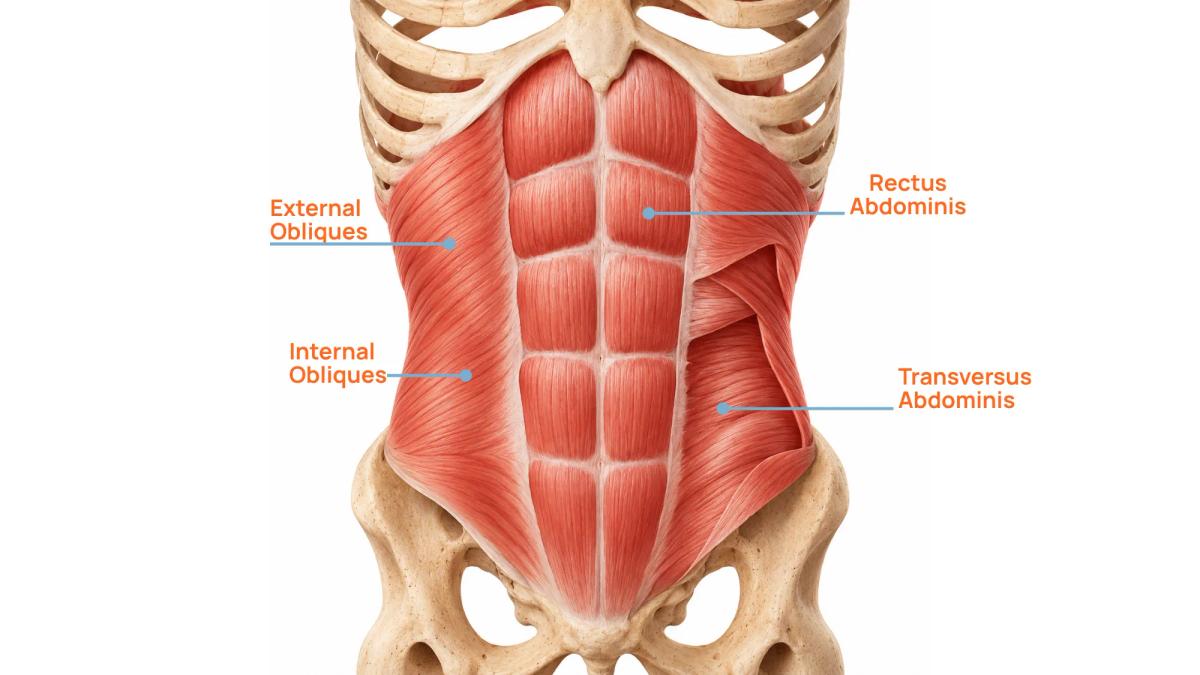
Before selecting the best ab workouts, it helps to understand what you're actually training. Your core is not one single muscle. It consists of several muscle groups working together to control your spine, pelvis, and trunk. Understanding their different functions allows you to select exercises that develop a more complete and functional core.
1. Rectus Abdominis (The "Six-Pack"):
The rectus abdominis runs vertically along the front of your abdomen from the rib cage toward the pelvis. This is the muscle responsible for the familiar "six-pack" appearance. One of its primary functions is spinal flexion, bringing the rib cage and pelvis closer together. Exercises such as cable crunches and controlled crunch variations directly train this function.
For visible abdominal development, don't rely only on hundreds of repetitions. The rectus abdominis can be trained progressively with resistance just like other skeletal muscles.
2. External & Internal Obliques:
These muscles are located along the sides of your trunk. They control:
- Trunk rotation
- Lateral flexion or side bending.
- Pelvic and spinal stability.
- Resisting unwanted rotation.
- Transferring force between the upper and lower body.
Exercises such as cable woodchoppers train rotational movement, while exercises such as Pallof presses train your ability to resist rotation, an equally important core function. Strong obliques are valuable not only for appearance but also for athletic movements that involve running, throwing, changing direction, and transferring force through the torso.
3. Transverse Abdominis (TVA):
The transverse abdominis is one of the deepest abdominal muscles. Its fibers wrap around the torso and contribute to abdominal compression, trunk control, and spinal stability. Think of it as part of your body's internal stabilization system.
The TVA works alongside other deep core muscles, the diaphragm, pelvic floor, and spinal stabilizers to help create trunk stiffness and control. Exercises that require you to prevent excessive spinal movement such as ab wheel rollouts, planks, dead bugs, carries, and Pallof presses, can help develop this type of core stability.
4. Lower Abs (Inferior Rectus Region):
The commonly used term "lower abs" refers to the lower portion of the rectus abdominis rather than a completely separate abdominal muscle. You cannot fully isolate the upper and lower rectus abdominis because the entire muscle works together. However, exercises involving controlled posterior pelvic tilt and movements that bring the pelvis toward the rib cage can place greater emphasis on the lower region.
This is why movements such as reverse crunches, hanging knee raises, and hanging leg raises are commonly used as a lower ab exercise. The important detail is pelvic movement. Simply lifting your legs without curling the pelvis can shift much of the workload toward the hip flexors.
The 5 Best Ab Workouts and Exercises at the Gym
These following good exercises for abs use gym equipment and body weight to apply mechanical tension and progressive overload to challenge several functions of your core. Rather than trying to perform all five exercises every day, select 3–4 movements that cover different core functions and progress them consistently.
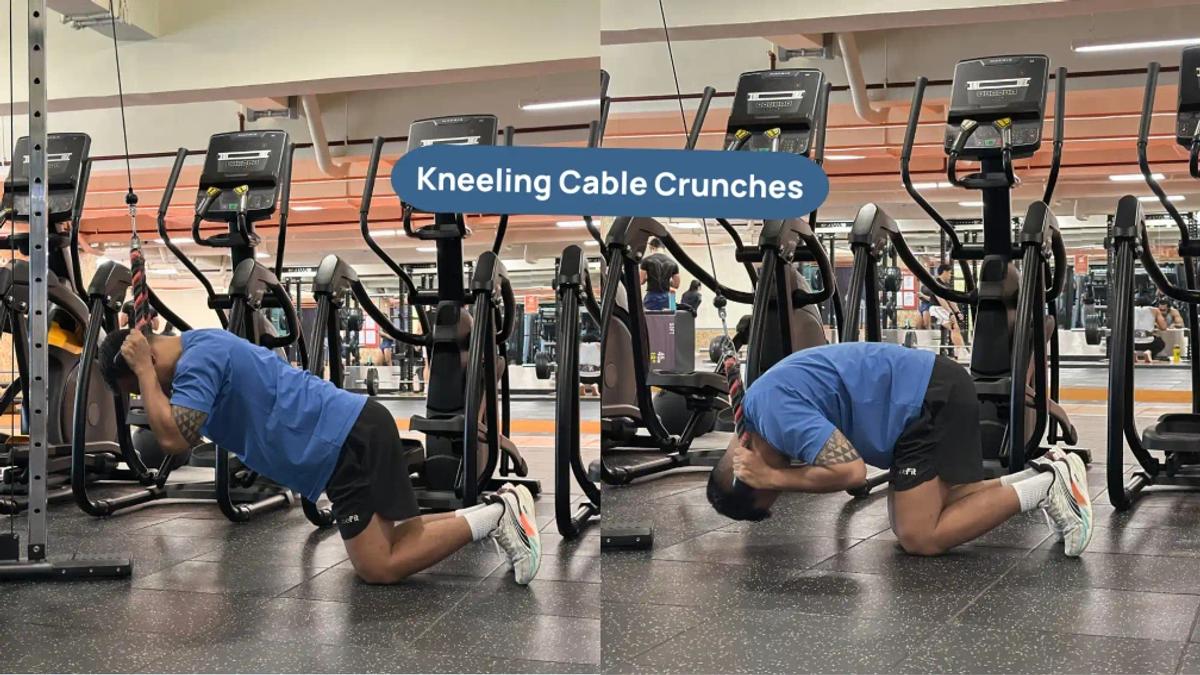
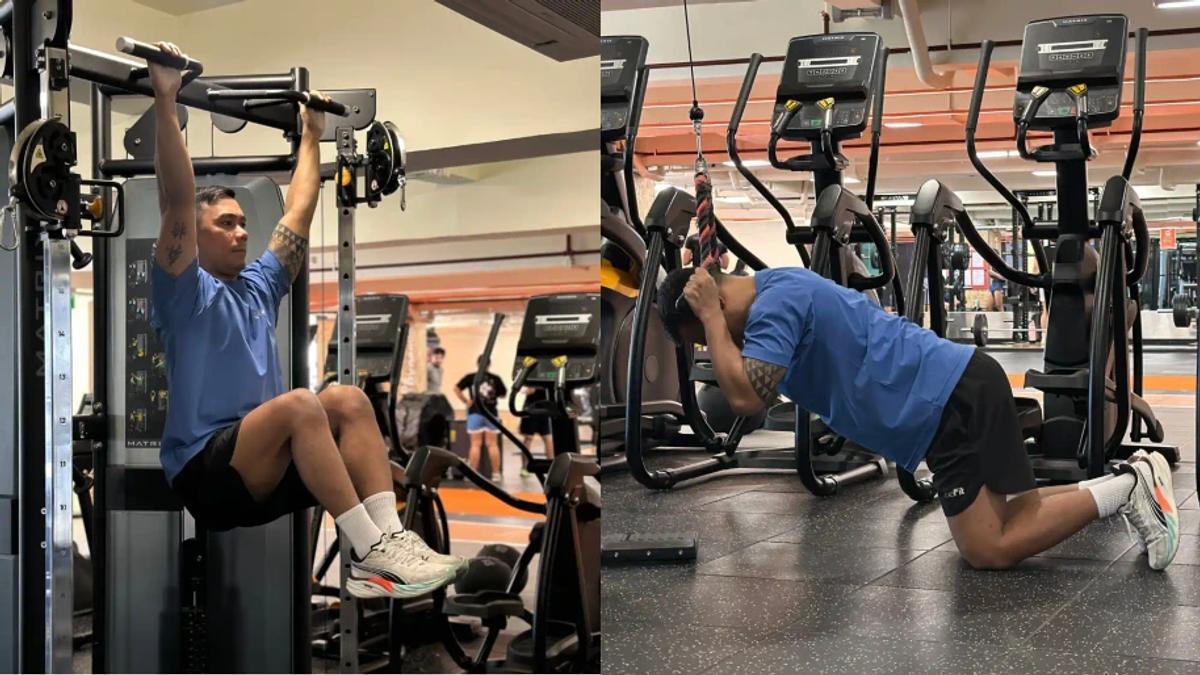
1. Kneeling Cable Crunches (Rectus Abdominis)
Why It Works: Cable crunches allow resistance to be progressively increased, making them one of the best ab workouts for developing the rectus abdominis. Unlike endless bodyweight crunches, the cable stack gives you an easy way to measure progress.
How to perform it:
- Attach a rope to a high cable pulley.
- Kneel approximately one step away from the machine.
- Hold the rope beside your head rather than pulling it down with your arms.
- Keep your hips relatively stable.
- Contract your abs and curl your rib cage toward your pelvis.
- Pause briefly at the bottom.
- Return slowly to the starting position.
Progression: Once you can complete the upper end of your repetition range with controlled technique, gradually increase the cable resistance.
2. Hanging Leg or Knee Raises (Rectus Abdominis, with significant involvement from the hip flexors)
Why It Works: The hanging knee or leg raise is an excellent lower ab exercise when performed with proper pelvic control. It also challenges grip, shoulder stability, and overall body control.
How to perform it:
- Hang from a pull-up bar with your body under control.
- Brace your core before beginning the repetition.
- Raise your knees or legs toward your torso.
- Near the top, focus on the final pelvic curl toward your rib cage.
- Lower slowly without allowing excessive swinging.
- Reset before beginning the next repetition.
Progression: For beginners, start with bent-knee raises. For advanced, progress toward straight-leg raises or toes-to-bar variations only after you can control the basic movement without momentum.
3. Ab Wheel Rollouts (Transverse & Rectus Abdominis)
Why It Works: The ab wheel challenges your ability to prevent your lower back from excessively extending as your arms move away from your body. This makes it a powerful core exercise for developing anti-extension strength and total-body control.
How to perform it:
- Begin kneeling with the wheel directly beneath your shoulders.
- Brace your abdomen and lightly tuck your pelvis.
- Slowly roll forward while keeping your trunk controlled.
- Stop before your lower back begins to sag.
- Use your abdominal muscles to pull yourself back toward the starting position.
Progression: For beginners, roll toward a wall to limit your range. For advanced, gradually increase rollout distance before attempting more difficult variations.
4. Cable Woodchoppers (Internal & External Obliques)
Why It Works: Cable woodchoppers train your core through rotational patterns and teach your torso, hips, and shoulders to coordinate force. This can be particularly useful for sports and everyday movements involving rotation.
How to perform it:
- Set the cable at an appropriate height.
- Stand sideways to the machine.
- Brace your core and maintain a stable lower body.
- Rotate through your torso in a controlled movement.
- Slowly return the cable rather than allowing the weight stack to pull you back.
- Avoid simply pulling the cable with your arms.
Progression: For beginners, 12 reps per side → 15 reps per side → increase weight slightly. For advanced, Half-Kneeling Woodchopper → More Explosive Rotational Cable Work.
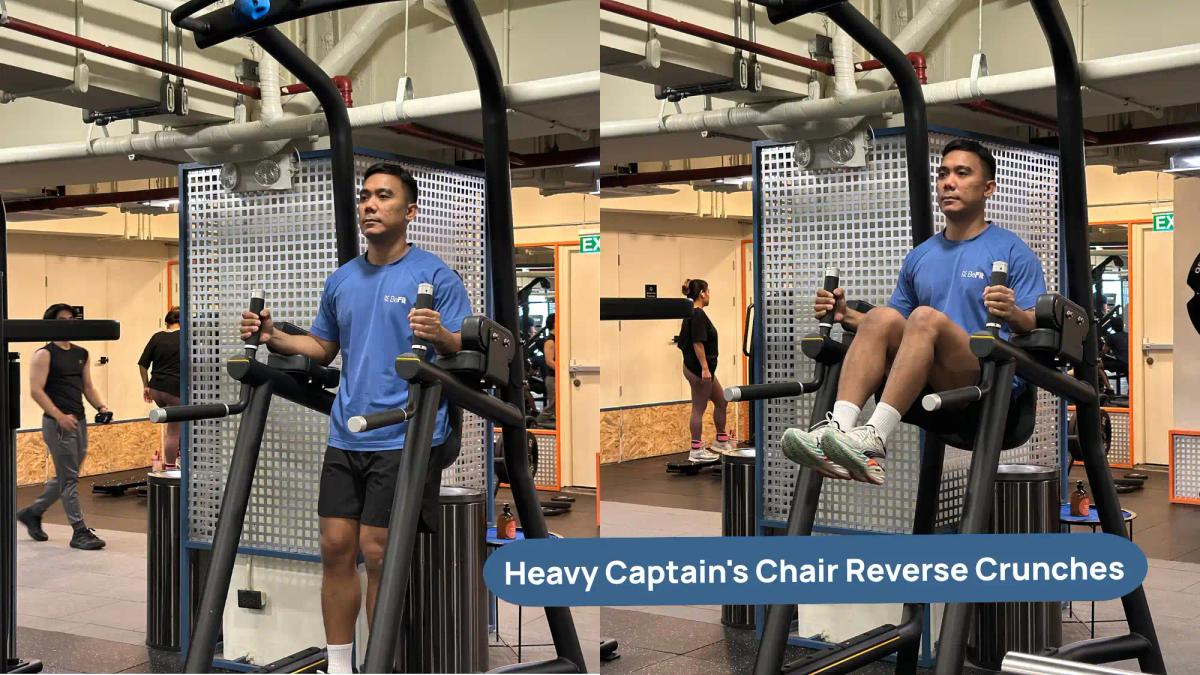
5. Heavy Captain's Chair Reverse Crunches (Targeted Lower Abs)
Why It Works: The captain's chair provides additional upper-body support, making this a useful progression between floor-based reverse crunches and unsupported hanging leg raises. It is another effective lower ab exercise because it allows you to concentrate on posterior pelvic tilt instead of simply lifting your thighs.
How to perform it:
- Position your back securely against the pad.
- Support your body through the arm pads.
- Brace your abdomen.
- Bring your knees toward your chest.
- Curl your pelvis upward at the top.
- Hold briefly before lowering under control.
- Avoid using momentum.
Progression: Once bodyweight repetitions become easy, increase difficulty through slower eccentrics, pauses, straighter legs, or carefully added resistance.
Complete Gym Core Routine: Sets, Reps, and Frequency
For most people, training the core 2 to 3 times per week is enough to build strength and muscle when the sessions are performed with appropriate intensity. You don't need a 30-minute ab workout after every gym session. A focused 10–15 minutes of quality core training performed consistently can be highly effective. Treat your abdominal muscles like other muscle groups: prioritize good technique, controlled repetitions, progressive overload, and adequate recovery.
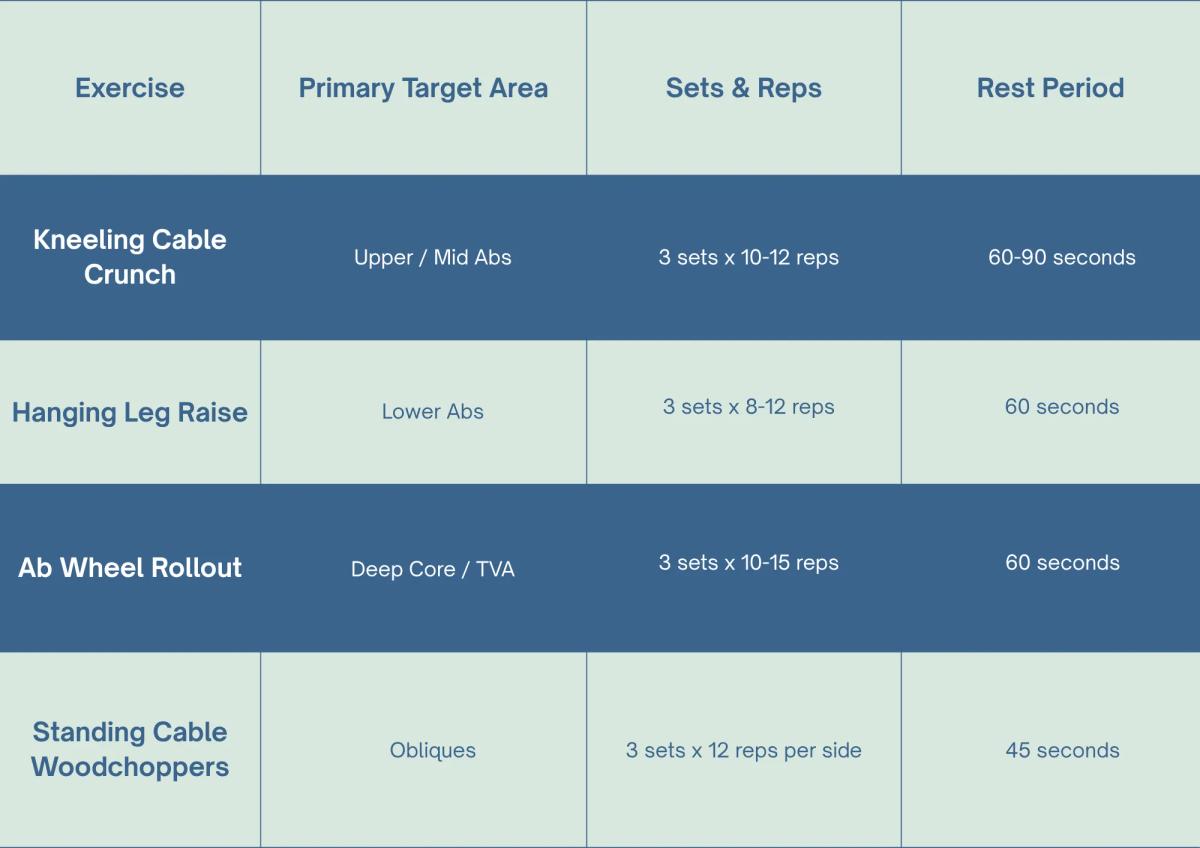
A simple progression strategy is to select a repetition range. For example, 10–12 reps. Once you can perform all prescribed sets for 12 controlled repetitions with excellent technique, slightly increase the resistance and begin progressing again. For exercises such as rollouts, progression can also mean increasing range of motion or improving control rather than simply adding weight.
Example weekly structure:
Monday: Cable Crunch + Hanging Knee RaiseWednesday: Ab Wheel Rollout + Cable WoodchopperFriday: Cable Crunch + Hanging Leg Raise + anti-rotation exercise
This gives your core repeated weekly exposure while still allowing recovery between harder sessions.
The Truth About Visible Abs: Core Strength vs. Body Fat
Building strong abdominal muscles and seeing those muscles are two different goals.
Your ab workouts can increase abdominal strength and muscular development, but they cannot selectively burn the fat covering your stomach. This is why performing hundreds of crunches doesn't specifically remove belly fat, a concept commonly referred to as spot reduction.
Visible abs depend on several factors, including: Overall body-fat percentage, abdominal muscle development, genetics and where your body tends to store fat, sex, age, fat distribution and nutrition and energy balance.
Body Fat Thresholds for Visible Abs:
- Men: Typically need to reach 10% to 12% body fat or lower for full abdominal definition.
- Women: Typically need to reach 18% to 20% body fat or lower for clear core definition.
These are general ranges, not targets or guarantees. Two people with the same measured body-fat percentage can have very different levels of abdominal visibility. Most importantly, getting leaner is not always better. Extremely low body-fat levels can be difficult to maintain and may negatively affect energy, recovery, training performance, hormonal health, and overall wellbeing. Instead of chasing the lowest possible body-fat percentage, aim for a healthy and sustainable level where you feel strong, energetic, and able to perform well.
To drop your body fat percentage while preserving your hard-earned muscle mass, pair your gym core workouts with a proper maintenance or mild deficit macro strategy. Read our detailed guide on what is body recomposition to learn how to burn fat and build muscle simultaneously.
Frequently Asked Questions
Can I do an abs workout at the gym every day?
You can perform some low-intensity core activation work frequently, but hard ab workouts generally don't need to be performed every day. Your abdominal muscles respond to resistance training and require recovery just like other muscle groups. For most people, 2–3 focused core sessions per week are sufficient when exercises are challenging and progressively overloaded. Daily high-volume ab training may simply create unnecessary fatigue without producing faster results. Instead, focus on quality repetitions, progressive overload, proper technique, multiple core functions and adequate recovery. Remember that your core also works during many compound exercises including squats, deadlifts, lunges, overhead presses, loaded carries, and rows, so it receives additional training even when you're not performing direct abdominal exercises.
What is the best lower ab exercise at the gym?
The hanging leg raise or hanging knee raise is one of the most effective options because it allows you to combine hip flexion with posterior pelvic tilt while requiring significant trunk stabilization. However, there isn't one universal "best" lower ab exercise for everyone. Your best choice depends on your current strength and ability to control your pelvis.
A useful progression is:
- Beginner: Reverse Crunch
- Intermediate: Captain's Chair Knee Raise
- Intermediate/Advanced: Hanging Knee Raise
- Advanced: Controlled Hanging Straight-Leg Raise
The goal is not simply to progress to the hardest exercise. Choose the variation that allows you to perform controlled repetitions while actually feeling and controlling the abdominal contraction. If you swing, excessively arch your lower back, or rely mainly on your hip flexors, regress the movement and rebuild your technique.
Why are my abs not showing even though I train them hard?
There are several possible reasons, the most common is that your abdominal muscles are still covered by enough subcutaneous body fat to prevent clear definition. Even extremely strong abdominal muscles may not be visible when body-fat levels are higher. However, body fat isn't the only factor. Your abs may also lack sufficient muscular development. If you've spent years performing only light, high-repetition crunches, your abdominal muscles may benefit from progressive resistance exercises such as weighted cable crunches.
Other factors include:
- Genetics and natural fat distribution.
- Inconsistent nutrition.
- Insufficient protein intake.
- Poor training progression.
- Inadequate sleep and recovery.
- Unrealistic expectations about how quickly body composition changes.
If visible abs are your goal, combine structured ab workouts with full-body resistance training and a sustainable nutrition strategy that gradually reduces overall body fat while preserving muscle. Avoid extreme dieting just to reveal your abs. A slower, sustainable approach is more likely to protect your strength, muscle mass, energy, and long-term results.
Get a Personalized Core & Body Transformation Plan
A strong core should do much more than look good. It should help you lift better, move more efficiently, stabilize your spine, transfer force, and perform everyday and athletic movements with greater control. The best program therefore combines direct abdominal training with full-body strength training, appropriate cardio, good nutrition, and recovery.
If you're unsure which core exercise is appropriate for your current fitness level, how much resistance to use, or how to structure your training for visible abs, professional coaching can help you progress safely and efficiently. Work directly with a certified BeFit Personal Trainer to improve your exercise technique, build progressive ab workouts, and structure your overall strength program. Pair your training with guidance from a BeFit Nutritionist to create a nutrition strategy aligned with your body-composition goals.