To grow your glutes effectively, train them 2–3 times per week, using a combination of hip-extension exercises, movements that challenge the glutes at longer muscle lengths, unilateral exercises, and targeted isolation work.
Use different repetition ranges depending on the exercise:
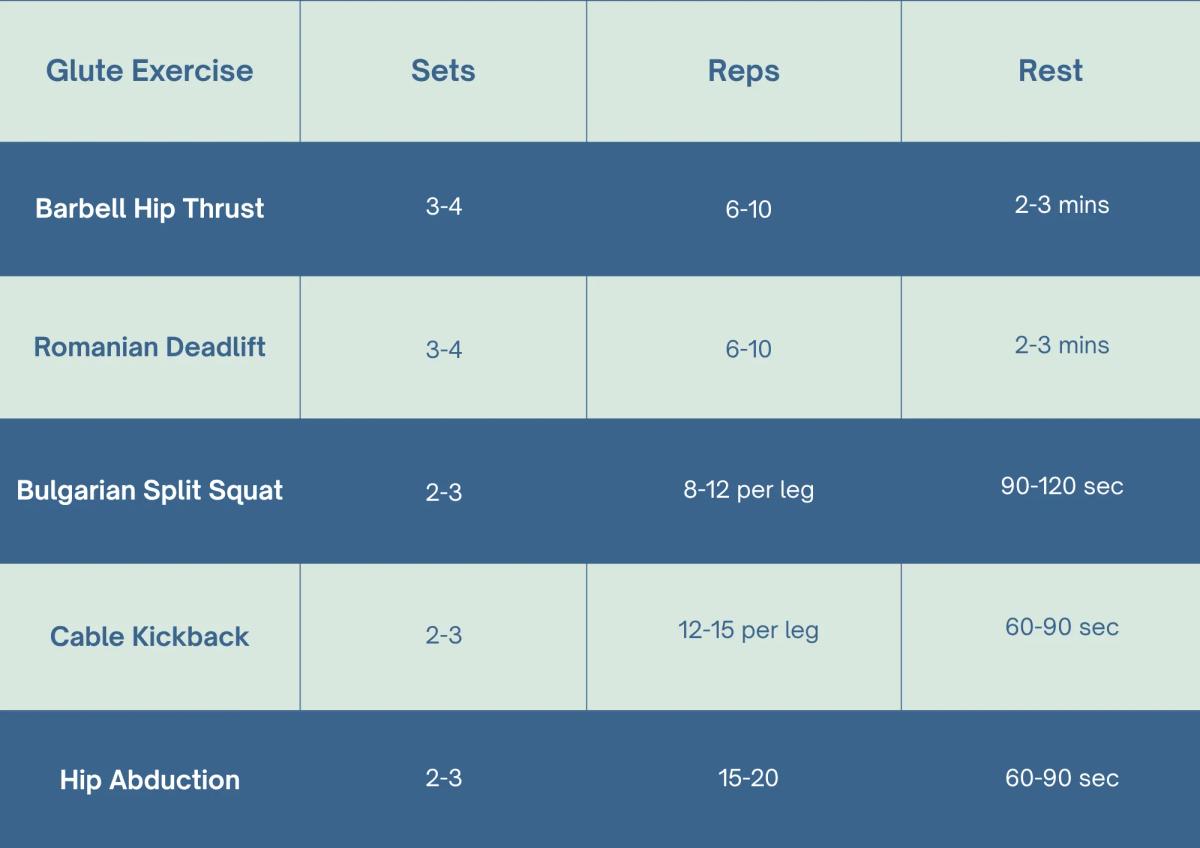
The goal isn't simply to create a strong burn. To build muscle, you need to progressively challenge the glutes over weeks and months. Combine this progression with sufficient protein, calories, sleep, and recovery, and you have the fundamental ingredients needed to build your glutes over time.
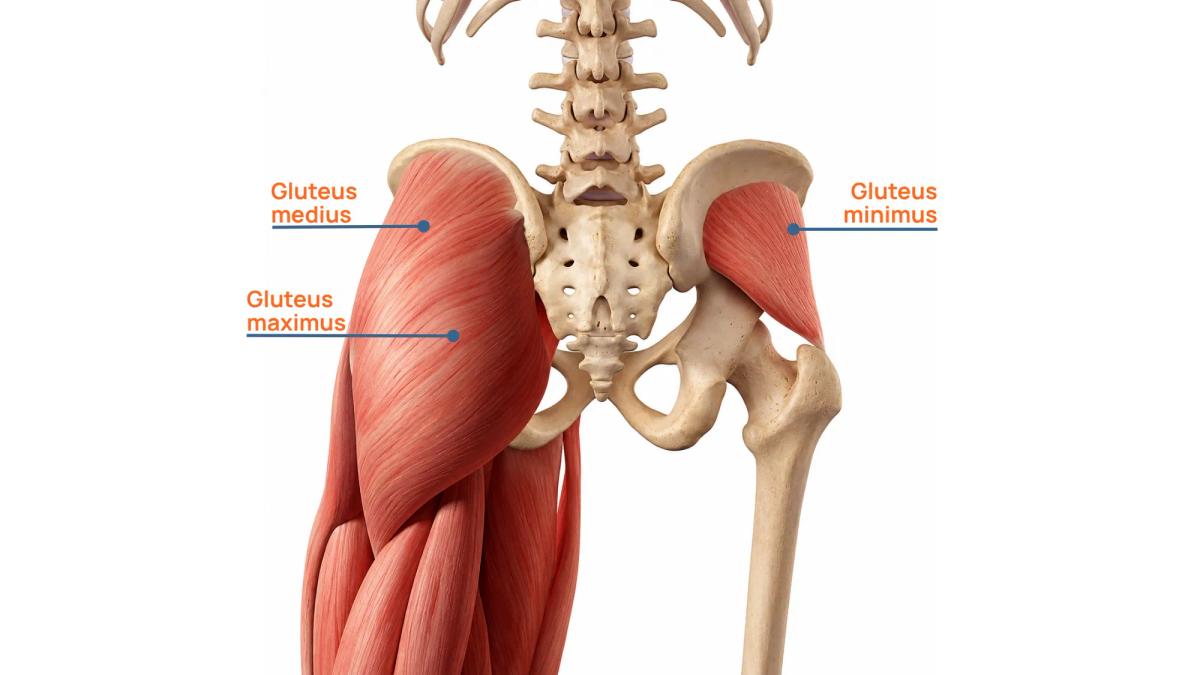
Anatomy of the Glute Muscles: What You Need to Target
Understanding the three distinct muscles that make up your posterior chain allows you to select the right exercise for hips and butt development. The gluteal region consists primarily of three muscles:
- Gluteus Maximus: Is the largest of the gluteal muscles and one of the largest muscles in the human body. Its major function is hip extension, moving your thigh backward or bringing your torso upright from a hip-hinged position. It contributes significantly to glute size and shape and is heavily involved in movements such as hip thrusts, Romanian deadlifts, squats, lunges, step-ups, and sprinting.
- Gluteus Medius: Located on the upper outer side of the hip, the gluteus medius contributes to hip abduction, pelvic stability, and control of the femur. It becomes particularly important during single-leg movements because it helps stabilize the pelvis. Exercises such as hip abductions, lateral movements, split squats, and step-ups can challenge the gluteus medius in different ways.
- Gluteus Minimus: Situated beneath the gluteus medius, it contributes to hip abduction and rotation while helping stabilize the hip and pelvis during movement.
To build a complete, balanced physique, a targeted glutes workout must hit all three muscles through varying angles and movement patterns, like hip abduction, hip extension, hip hinging, squatting/lunging and single-leg training.
The 5 Best Glute Exercises at the Gym
Exercise effectiveness depends on biomechanics, range of motion, technique, training experience, progression, comfort, and your ability to load the movement consistently. The following glute exercises gym members can perform cover several important movement patterns and provide excellent opportunities for progressive overload.
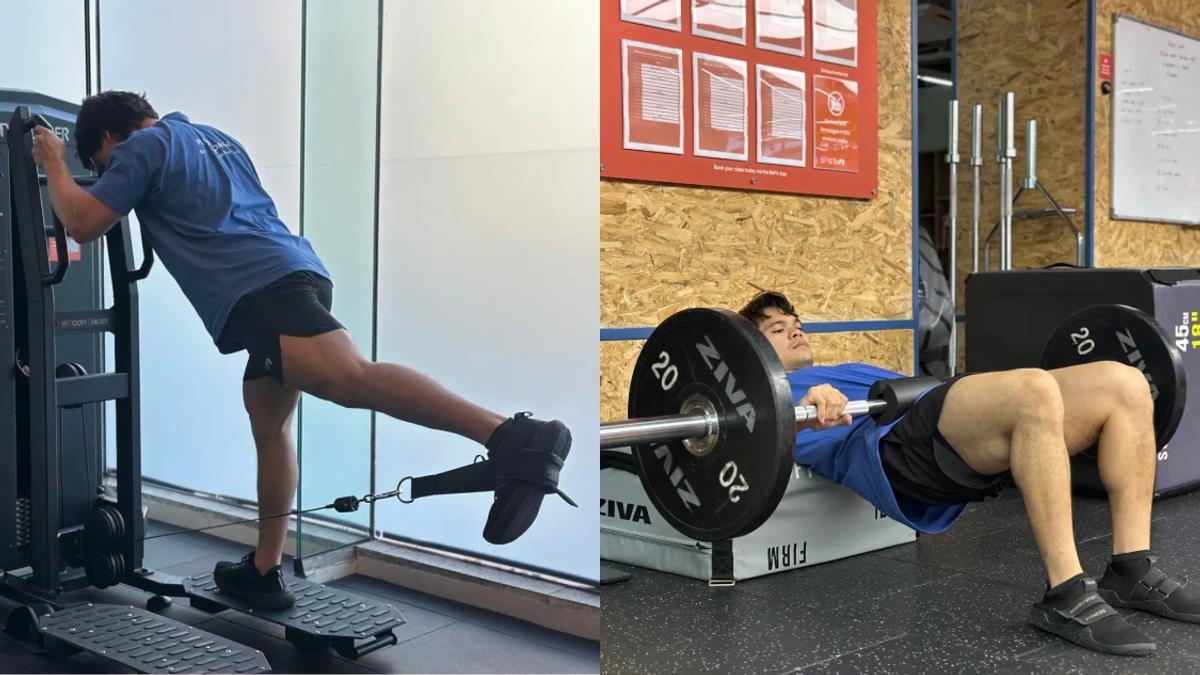
1. Barbell Hip Thrust (Primarily Gluteus Maximus)
Why It Works: The barbell hip thrust challenges hip extension and places substantial tension on the glutes as the hips approach full extension. It is also easy to progressively load, making it particularly useful for tracking strength improvements over time.
How to perform it:
- Position your upper back against a stable bench.
- Place the bar securely across the hip crease using appropriate padding.
- Position your feet approximately hip-to-shoulder width apart.
- Brace your trunk before beginning the repetition.
- Drive through your feet and extend your hips.
- Finish with your hips extended and ribs controlled.
- Lower the weight under control.
- Keep your chin relatively tucked and ribs controlled. Avoid finishing the repetition by excessively arching your lower back.
Progression: Once you can perform all prescribed repetitions with good technique, add a small amount of weight or additional repetitions.
2. Romanian Deadlifts (Gluteus Maximus and Hamstrings)
Why It Works: Romanian deadlifts challenge the glutes and hamstrings while they are working at relatively long muscle lengths. This makes the RDL an excellent complement to hip thrusts. Where the hip thrust emphasizes hip extension closer to the shortened position, the RDL provides substantial loading while the hips travel backward and the posterior chain lengthens.
How to Perform It:
- Stand tall while holding the barbell or dumbbells.
- Keep your knees slightly bent.
- Brace your trunk.
- Push your hips backward.
- Keep the weight close to your legs.
- Lower until you've reached your available hip-hinge range while maintaining control.
- Drive your hips forward to return to standing.
Progression: First improve range of motion and control. Then gradually increase repetitions or resistance while maintaining the same technique.
3. Bulgarian Split Squat (Gluteus Maximus, Quadriceps, and Hip Stabilizers)
Why It Works: Bulgarian split squats train one leg at a time through a large range of motion and can place substantial tension on the glutes, particularly when the exercise is performed with an appropriate stance and controlled depth. Single-leg training also challenges pelvic and hip stability.
How to Perform It:
- Position your rear foot on a bench.
- Place your front foot far enough forward that you can descend comfortably.
- Maintain pressure through the whole front foot.
- Lower your body under control.
- Allow a comfortable amount of forward torso inclination.
- Drive through the front leg to return to standing.
- Focus on achieving a deep, controlled hip position while keeping your front foot stable.
Progression: Begin with bodyweight if necessary, then progress to dumbbells, heavier dumbbells, or a barbell once balance and technique are established.
4. Cable Kickbacks (Upper Gluteus Maximus & Gluteus Medius)
Why It Works: Cable kickbacks provide a controlled way to isolate hip extension without requiring heavy spinal loading. They work particularly well after your heavier compound movements because you can directly train the glutes with relatively little overall fatigue.
How to Perform It:
- Attach an ankle strap to a low cable.
- Hold the machine for stability.
- Brace your trunk.
- Move your working leg backward through a comfortable range.
- Contract your glute at the end of the movement.
- Slowly return to the starting position.
- Avoid dramatically arching your lower back to create additional range.
Progression: Start with a resistance you can control for approximately 12–15 repetitions. Build toward the upper end of your repetition range before increasing the cable weight slightly.
5. Seated Cable/Machine Hip Abductions (Gluteus Medius, Gluteus Minimus, and portions of the Gluteus Maximus)
Why It Works: Hip-abduction exercises directly challenge the muscles responsible for moving the thighs away from the body's midline. This makes them a useful accessory movement for developing the lateral gluteal region and improving hip strength.
How to Perform It:
- Sit securely in the machine.
- Position your legs against the pads.
- Brace your torso.
- Drive your knees outward.
- Pause briefly in the open position.
- Return slowly rather than allowing the weight stack to pull your legs inward.
- Avoid bouncing or using momentum.
Progression: Begin around 15–20 controlled repetitions. Once you can comfortably reach the top of your target range, increase the resistance and rebuild your repetitions.
Optimal Sets and Reps for Fast Glute Growth
Glute muscles can grow across a relatively broad range of repetitions when sets are sufficiently challenging and performed with appropriate technique. For practical gym programming, however, different exercises usually work better in different repetition ranges.
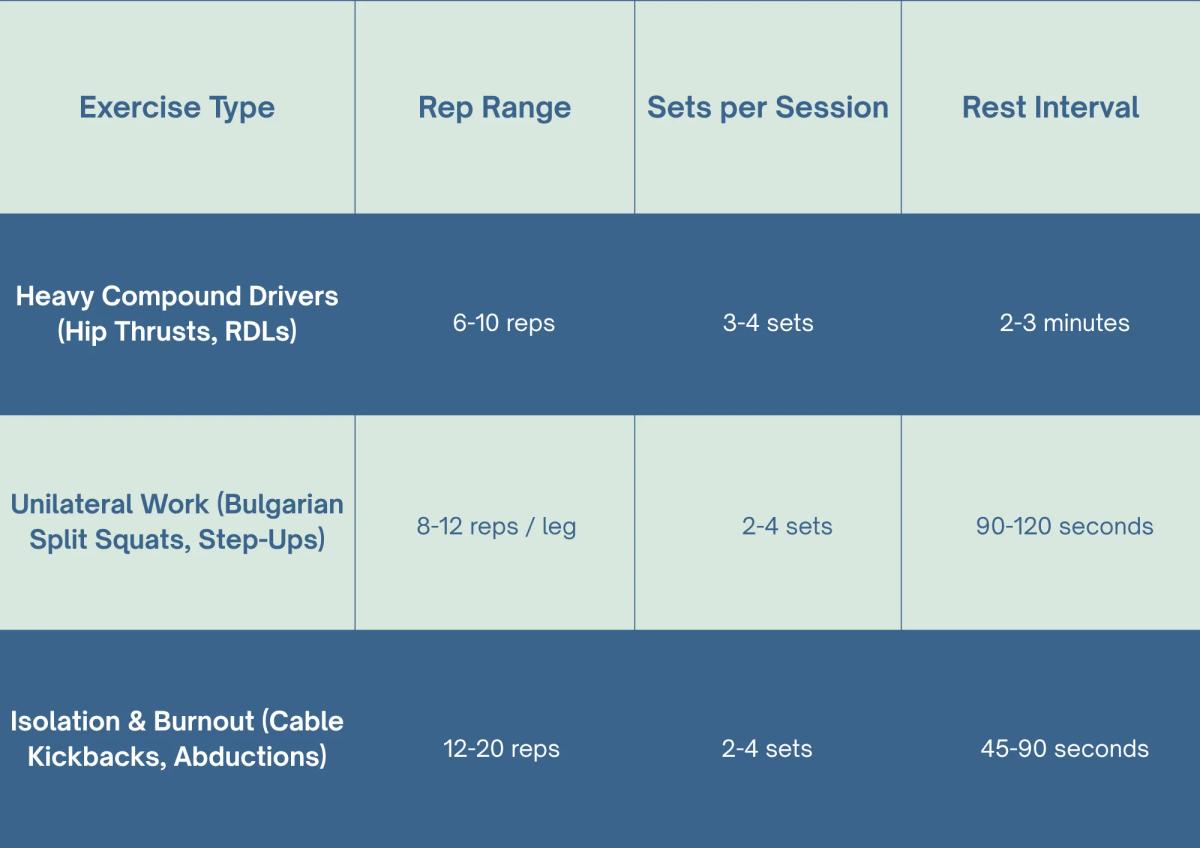
Weekly Volume: Approximately 10–20 challenging glute-focused sets per week can be an effective broad range for many trained individuals, but more isn't automatically better. For hypertrophy, most working sets should finish reasonably close to muscular failure while maintaining good technique. Beginners may grow very effectively from fewer sets.
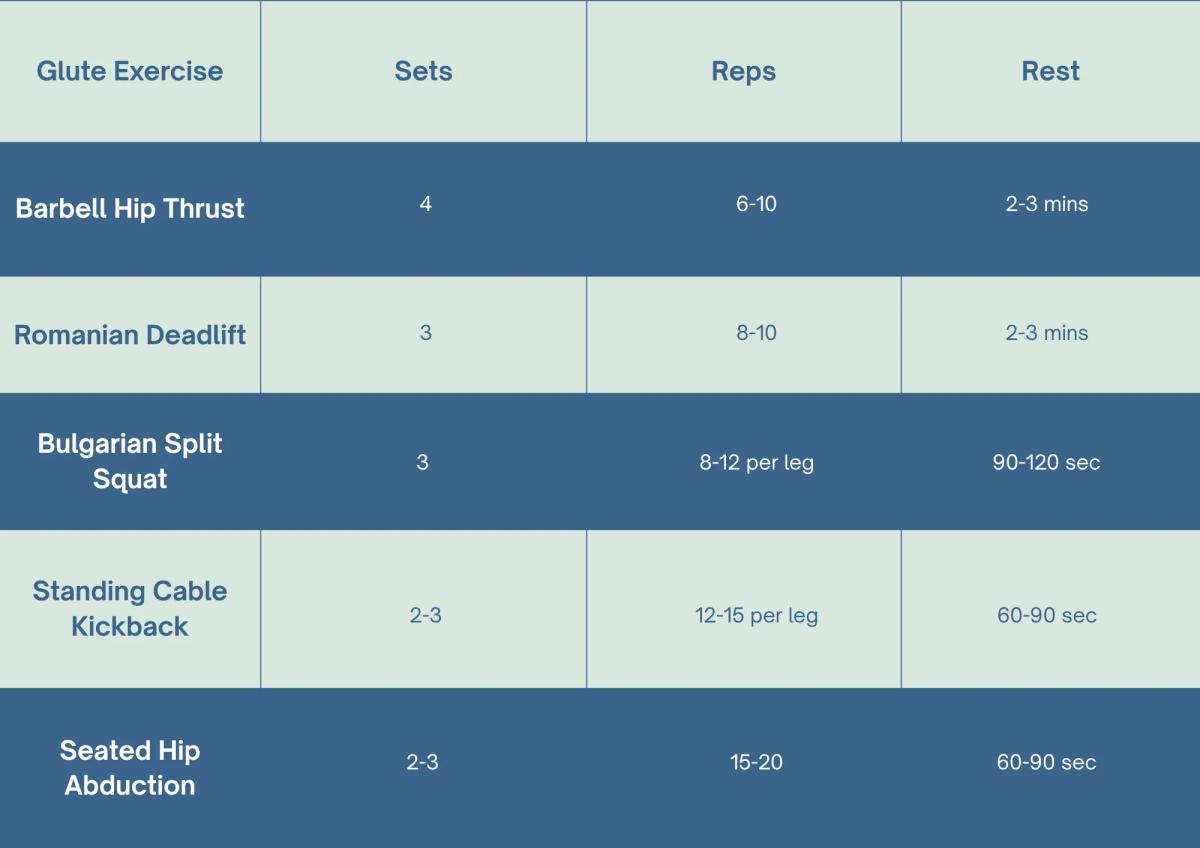
Sample Gym Glute Workout Routine
Incorporate this glutes workout twice per week, ideally leaving approximately 48–72 hours between harder glute-focused sessions.
Warm-Up (5–8 Minutes): Start with light cycling, treadmill walking, or another easy activity to increase body temperature. Then perform: Glute Bridge: 1–2 sets × 12–15 reps + Banded Lateral Walk or Clamshell: 1–2 sets × 10–15 reps per side.
Main Workout:
The 3 Non-Negotiable Rules to Make Your Glutes Grow
1. Master Mind-Muscle Connection
Due to prolonged sitting, many individuals experience delayed glute activation (glute amnesia). In reality, your glutes don't simply stop functioning. However, long periods of inactivity, poor movement habits, limited strength, and unfamiliarity with an exercise can make it more difficult for some people to effectively control or feel their glutes during training.
Before loading heavy weights, perform bodyweight activation drills such as glute bridges, lateral band walks, clamshells and bodyweight hip hinges, which can help you practice the movement pattern and improve awareness of the muscles you're trying to train. However, don't turn your warm-up into a full workout, a 5–10 minutes is usually enough.
2. Apply Progressive Overload
You cannot expect your glutes muscles to continue adapting if your training stimulus never progresses. Progressive overload means gradually increasing the challenge placed on the muscle over time. You can progress by:
- Increase the weight lifted.
- Perform more reps with the same weight.
- Adding a set when appropriate.
- Improving exercise technique.
- Increasing usable range of motion.
- Slow down the eccentric (lowering) phase for increased time under tension.
Once you reach the top of the repetition range with good technique: Increase the weight slightly and begin progressing again. This provides a clear, measurable system rather than randomly changing your workouts every week.
3. Fuel Muscle Protein Synthesis
Lifting heavy weights creates the stimulus for growth, but your body also needs sufficient nutrition to repair and build tissue. Protein provides the essential amino acids required for muscle protein synthesis. For people performing regular resistance training, approximately 1.6–2.2 grams of protein per kilogram of body weight per day is a practical target range.
If maximizing glute muscle growth is your main goal, constantly eating in a large calorie deficit can make gaining muscle more difficult. Maintenance calories or a modest calorie surplus may be more appropriate depending on your starting body composition and goals.
Ensure you are consuming adequate daily protein to repair and expand muscle fibers. To calculate your precise daily targets, refer to our complete guide on how much protein do I need.
Frequently Asked Questions
How fast can you realistically grow your glutes?
Glute growth takes time. Beginners may notice improvements in strength, exercise technique, muscle firmness, and shape within the first 6–8 weeks of consistent training. However, visible hypertrophy usually develops gradually over 3 to 6 months of consistent training.
Your rate of progress depends on genetics, training experience, training volume, exercise selection, progressive overload, protein intake, total calorie intake, consistency, sleep and recovery. Don't judge your program based on one week or one workout.
Can I build glutes without growing my legs?
Yes, you can design your program to emphasize glute development while limiting unnecessary quadriceps volume, but completely building the glutes without involving other leg muscles isn't realistic. The glutes work together with your hamstrings, quadriceps, adductors, and other muscles during most lower-body exercises.
If your priority is maximizing glute development while minimizing quadriceps emphasis, place more training volume into exercises such as: Barbell hip thrusts, glute bridges, romanian deadlifts, cable kickbacks, hip abductions, glute-biased split squats and glute-biased step-ups. You can reduce but don't necessarily need to completely eliminate quad-dominant movements such as high-volume leg extensions or certain squat variations.
How many times a week should I train glutes?
For most people, training glutes 2 to 3 times per week is optimal. This allows you to distribute your weekly training volume across multiple sessions instead of attempting to perform every set in one exhausting workout. For example:
2-Day Glute Schedule: Monday → Glute Workout A & Thursday → Glute Workout B
Or:
3-Day Glute Schedule: Monday → Heavy Glutes, Wednesday → Light / Isolation & Saturday → Moderate Glutes
Frequency itself doesn't magically create more muscle growth. What matters is how much productive weekly training volume you can perform and recover from. If you're still extremely sore or your performance hasn't recovered when your next session arrives, you may need more recovery time or less training volume. If you're recovering well and your strength is steadily progressing, your current frequency is probably appropriate.
Perfect Your Form with a Personal Trainer
Building stronger and more developed glutes isn't about finding one secret exercise or doing hundreds of band repetitions. A complete glute-building strategy combines: Smart Exercise Selection + Progressive Overload + Appropriate Weekly Volume + Sufficient Protein + Adequate Calories + Recovery + Consistency.
Your ideal program should also account for your training experience, hip structure, mobility, exercise tolerance, goals, and available equipment. If you're unsure whether you're performing hip thrusts, Romanian deadlifts, Bulgarian split squats, or other glute exercises gym movements correctly, professional coaching can help you improve your setup, technique, exercise selection, and progression. Book an in-person form assessment with a certified BeFit Personal Trainer today to build your custom glute training program.