What Is Body Recomposition? How to Lose Fat and Gain Muscle at the Same Time
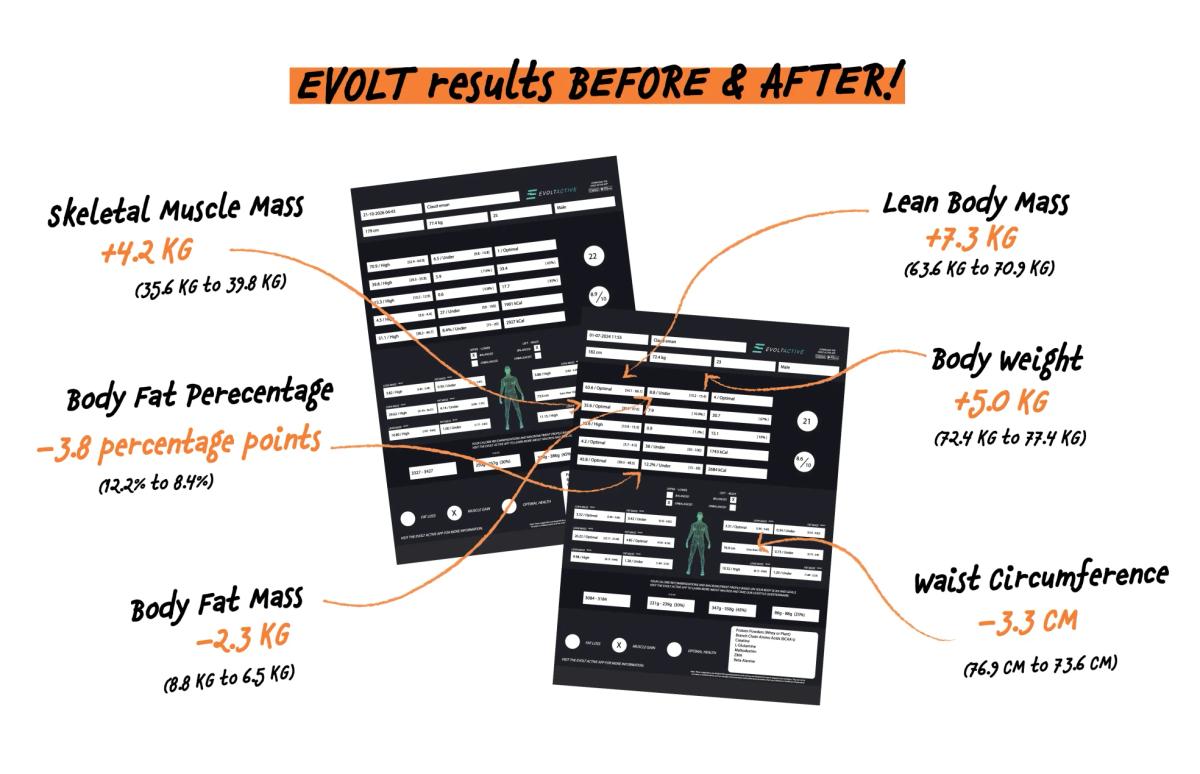
Real results courtesy of Coach Claud of BeFit
Body recomposition is the process of simultaneously reducing body fat while increasing or preserving lean muscle mass. Instead of focusing only on losing weight, the goal is to improve the ratio of muscle to fat in your body so that you become leaner, stronger, and more defined, even if your total body weight changes very little.
Unlike traditional fitness approaches that separate training into a "bulk" phase for gaining weight and a "cut" phase for losing fat, body recomposition aims to improve both at the same time. This is achieved by combining an appropriate calorie intake, sufficient protein, progressive resistance training and an adequate recovery.
In practical terms, strength training gives your muscles a reason to adapt and grow, while dietary protein provides the amino acids needed for repair. At the same time, stored body fat can contribute energy toward your body's daily needs. Over time, this combination can produce a noticeable reduction in waist size, improved muscle definition, better strength, and a healthier body composition without requiring dramatic changes on the bathroom scale.
The important difference is that body recomposition focuses on what your body is made of, not simply how much it weighs.
What does Body Recomp Mean?
The body recomp meaning is simple: changing the proportion of lean muscle mass to body fat while keeping your overall body weight relatively stable.
Traditional weight loss focuses primarily on reducing the number on the scale. However, aggressive dieting without enough protein or resistance training can result in losing both body fat and valuable muscle tissue. The scale may drop quickly, but strength, training performance, and body shape can also suffer.
Body recomposition, on the other hand, focuses on the quality of your body weight rather than simply the total number.
During a successful recomp, your scale weight may remain almost unchanged for weeks or even months because muscle is being gained while fat is being lost at the same time, your physique can look significantly different.
However, several visible and measurable changes can still occur:
- Your waist circumference decreases.
- Your muscles can become firmer and more defined.
- Your body fat percentage gradually drops.
- Your strength and gym performance improve.
- Your posture and movement quality may improve as you become stronger.
- Clothes may fit differently even when your body weight remains almost unchanged.
This is why body recomposition should never be evaluated using scale weight alone.
How Body Recomposition Works: The Science of Fueling Muscle with Fat
At first glance, losing fat and gaining muscle at the same time may seem contradictory. Building muscle requires energy, while fat loss usually requires an energy deficit. Body recomposition works by carefully balancing energy intake, protein consumption, and resistance training so your body receives a strong muscle-building stimulus while still using stored energy.
When you perform strength training, your muscles experience mechanical tension and microscopic tissue disruption. Your body responds by repairing and adapting those muscle fibers through a process known as muscle protein synthesis (MPS).
This process requires two important resources:
Amino acids from dietary protein provide the raw materials used to repair and build muscle tissue and Energy is required to support training, recovery, tissue repair, and many other metabolic processes.
If you're consuming approximately maintenance calories or, for some people, a small calorie deficit; while eating enough protein for body recomposition, your body has access to the amino acids required for muscle repair. At the same time, stored body fat can contribute energy toward recovery, daily activity, and training.
A simplified way to think about the process is:
[Appropriate Calories + High Protein Intake] + [Progressive Strength Training + Recovery] = Reduced Body Fat + Increased or Preserved Lean Muscle
However, body recomposition isn't an overnight process. Because you're attempting to improve two components of your physique simultaneously, progress is usually gradual. Consistency over several months is far more important than chasing dramatic week-to-week changes.
Who Is the Ideal Candidate for Body Recomposition?
Almost anyone can improve their body composition, but certain groups are particularly well positioned to gain muscle while losing fat.
- Beginners (New to Strength Training): Individuals with limited resistance-training experience often experience rapid strength and muscle gains. Because their muscles are highly responsive to a new training stimulus, they may gain muscle even without eating in a calorie surplus.
- Returners (After a Long Break): People returning to strength training after several months or years away may regain previously developed muscle faster through what is commonly called muscle memory. This can create an excellent opportunity to rebuild muscle while simultaneously reducing excess body fat.
- Individuals with Higher Body Fat: People carrying additional body fat have larger stored energy reserves. Combined with resistance training and sufficient protein, this can make it possible to reduce fat while maintaining or building lean muscle.
- Skinny-Fat Individuals: Someone may have a normal body weight but relatively low muscle mass and a higher percentage of body fat. For these individuals, aggressive dieting may make them smaller without significantly improving their physique. A body recomp focused on resistance training and adequate protein is often a better strategy.
- People Who Prefer Sustainable Changes: Body recomposition can also appeal to people who don't want to alternate between aggressive bulking and restrictive dieting. It encourages consistent training and sustainable nutrition habits instead of large swings in calorie intake.
Intermediate and advanced lifters can also achieve body recomposition, but the process usually becomes slower as training experience increases. More experienced lifters may therefore require more precise programming, nutrition, recovery, and progression.
The Body Recomposition Diet: Calories and Macros
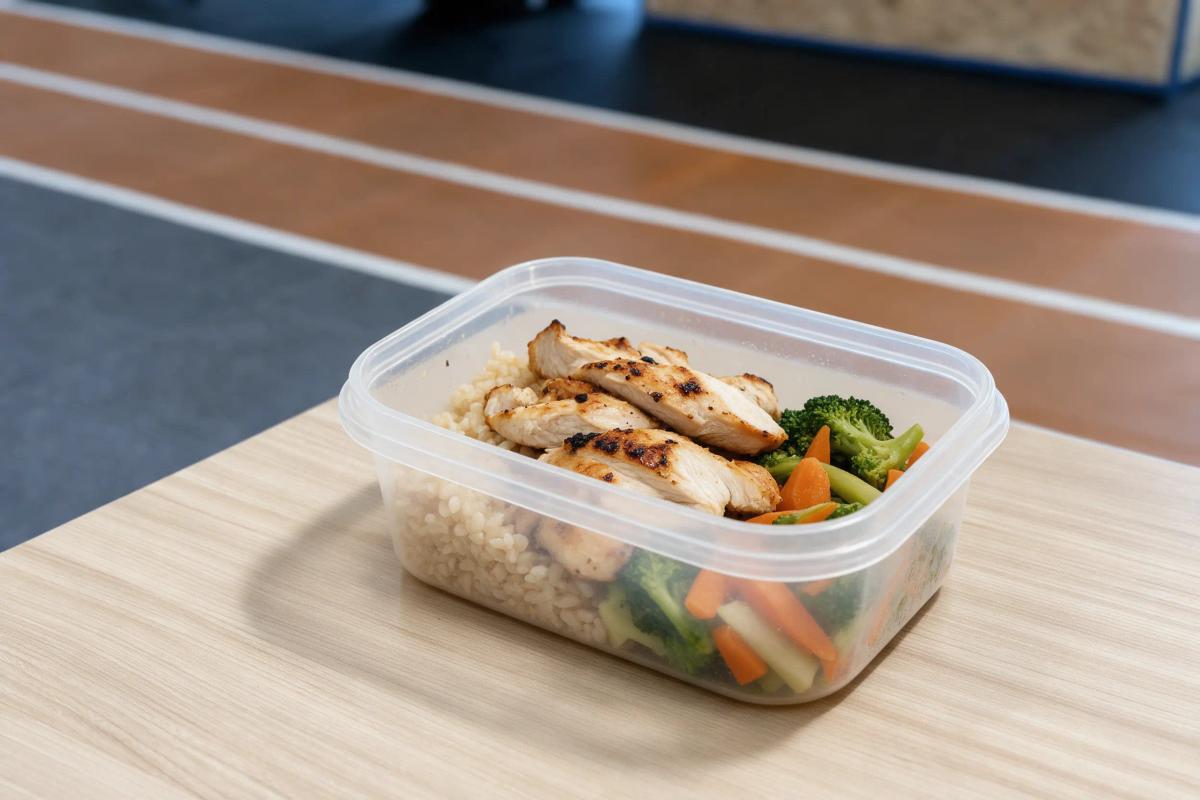
A successful body recomposition diet is built around two major factors: energy balance and macronutrient intake. The goal isn't to dramatically reduce calories but to provide enough nutrition to train effectively, recover properly, and support muscle growth while controlling overall calorie intake.
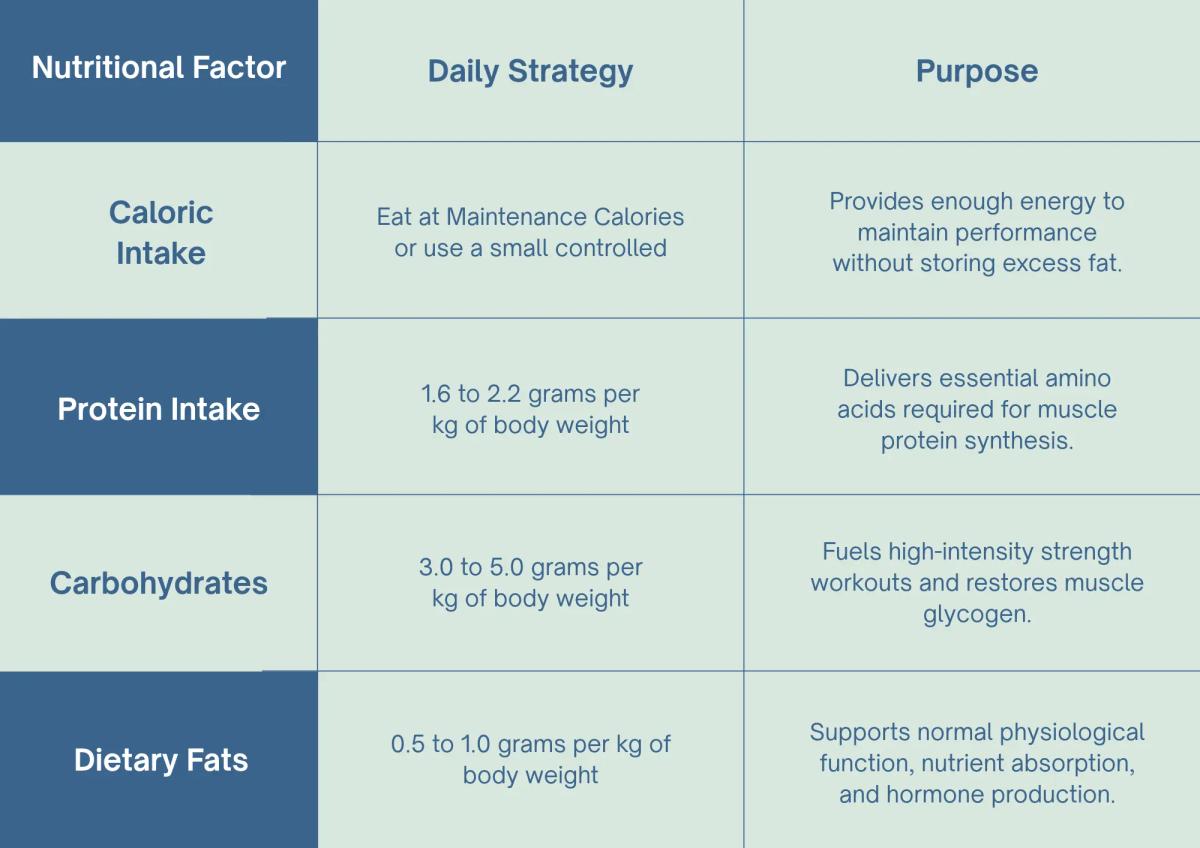
Food quality also matters. Build most of your diet around nutrient-dense foods such as lean proteins, whole grains, fruits, vegetables, legumes, dairy or suitable alternatives, nuts, seeds, and healthy fat sources.
1. Setting Your Calories at Maintenance
Start by estimating your Total Daily Energy Expenditure (TDEE), the approximate number of calories you burn each day through your resting metabolism, digestion, daily movement, work, and exercise. Eating approximately the same number of calories as your TDEE places you near calorie maintenance.
For example, if your estimated TDEE is 2,400 calories per day, starting around 2,400 calories gives your body enough energy to support training without deliberately creating a large calorie surplus. However, calorie calculators are estimates rather than exact measurements. Your true maintenance level is best identified by monitoring your average body weight, waist measurements, appetite, energy, and training performance for several weeks.
If your body weight and measurements are increasing too quickly, calories may be too high. If your weight is dropping rapidly and your strength is declining, your calorie intake may be too low. The goal during body recomposition is generally small, controlled adjustments not aggressive calorie restriction.
2. Following a High-Protein Diet for Body Recomposition
Following a high protein diet for body recomposition is one of the most important nutritional strategies because protein provides the amino acids your muscles require for repair and growth. Protein also helps with satiety, which can make appetite and calorie control easier. In addition, protein has a relatively high thermic effect of food, meaning your body uses more energy digesting and processing it compared with dietary fat.
Aim for approximately 1.6 to 2.2 grams of protein for body recomposition per kilogram of body weight daily (about 0.73 to 1.0 grams per pound).
For example:
- 60 kg: approximately 96–132 g protein per day
- 70 kg: approximately 112–154 g per day
- 80 kg: approximately 128–176 g per day
- 90 kg: approximately 144–198 g per day
Rather than eating most of your protein in one meal, distribute it across the day. A practical approach is to include a meaningful protein source at breakfast, lunch, dinner, and snacks where needed. Good protein sources include chicken, turkey, fish, lean beef, eggs, Greek yogurt, cottage cheese, milk, tofu, tempeh, soy, legumes, and protein supplements when convenient.
For a detailed breakdown of exact targets based on your weight and activity level, read our complete guide on how much protein do I need.
Training for Body Recomposition: The Role of Progressive Overload
Diet can help create the right nutritional environment, but resistance training provides the signal that tells your body to maintain and build muscle. This is why strength training should be at the center of a body recomposition program.
The key principle is progressive overload, gradually increasing the challenge placed on your muscles so they continue adapting over time. Progressive overload doesn't mean adding heavy weight every workout. Progress can come from lifting slightly more weight, completing additional repetitions, improving technique, increasing range of motion, controlling the weight better, or completing more productive training volume.
Key Rules for Recomp Strength Training:
1. Prioritize Resistance Training: Aim for approximately 3–5 strength-training sessions per week, depending on your experience, schedule, and recovery ability. Build your program around movements such as squats, deadlifts or hip hinges, presses, rows, lunges, pull-downs, and other exercises that train all major muscle groups.
2. Apply Progressive Overload: Track your workout and gradually improve your performance. If you performed 10 repetitions with a particular weight this month, progressing to 11–12 quality repetitions or slightly increasing the resistance can provide a new stimulus.
3. Train with Appropriate Intensity: Your working sets should be challenging enough to stimulate adaptation while maintaining safe technique. Constantly training too lightly may limit progress, while taking every set to complete failure can create unnecessary fatigue.
4. Keep Cardio Moderate: Cardiovascular training supports heart health, endurance, work capacity, and overall fitness. Moderate low-intensity (Zone 2) cardio or 1–2 short HIIT sessions per week can complement resistance training without unnecessarily compromising recovery.
5. Allow your Body to Recover: Muscle adaptation occurs between workouts, not only during them. Include rest or lighter training days and aim for approximately 7–9 hours of quality sleep per night.
6. Stay Consistent: A well-designed program followed consistently for six months will usually produce better results than constantly changing exercises, diets, and training methods every few weeks.
How to Track Progress During a Body Recomp (Without Scale Weight)
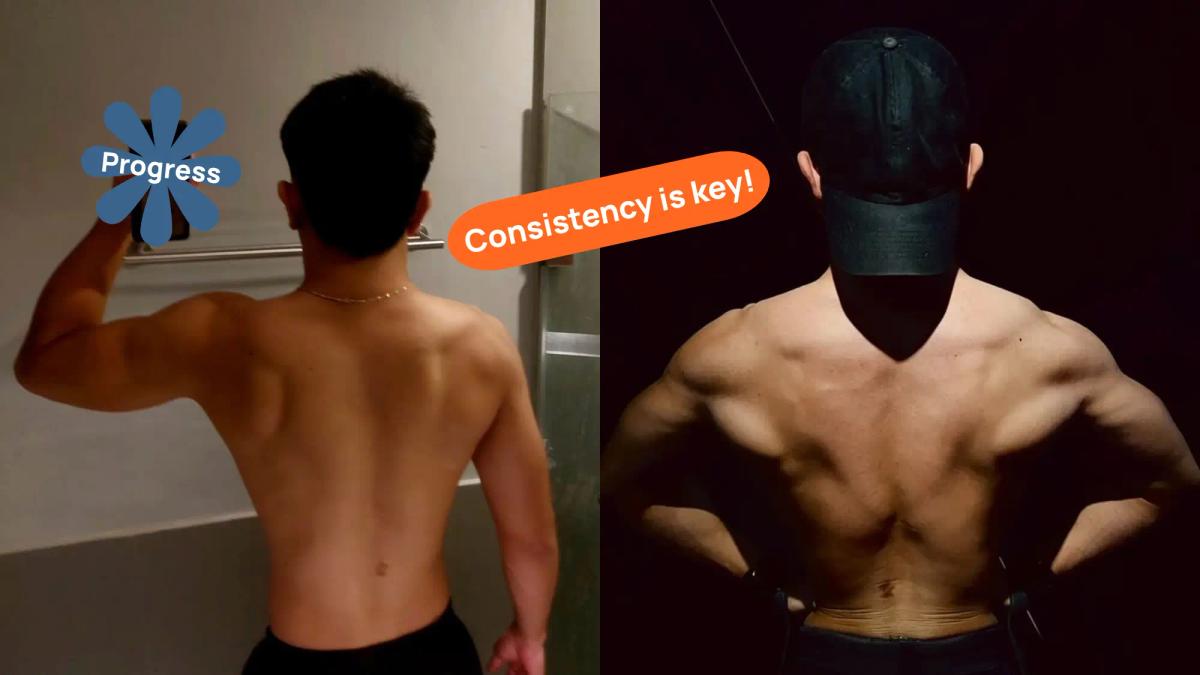
Photos courtesy of Coach Claud of BeFit
Because muscle gain and fat loss can happen at similar rates, the traditional bathroom scale is a poor tool for measuring body recomposition. For example, losing 2 kg of fat while gaining 2 kg of lean mass could theoretically leave your scale weight unchanged even though your physique and measurements have improved considerably. Instead, combine several progress indicators:
1. Progress Photos: Take front, side, and back photos every 2 to 4 weeks. Keep your lighting, clothing, distance, posture, and time of day as consistent as possible.
2. Body Measurements: Measure your waist, chest, hips, arms, and thighs approximately once per month. Waist circumference can be particularly useful when your primary objective includes fat loss.
3. Strength Performance: Track your workout logs. Increasing strength or repetitions while your waist measurement remains stable or decreases is a positive indicator that your body composition may be improving.
4. How your clothes fit: A looser waistband combined with tighter sleeves or improved shoulder fit can sometimes reveal changes that the scale doesn't show.
5. Body Composition Testing: Measurements from BIA scales, skinfold testing, or other assessment methods can provide additional information. However, hydration, food intake, testing conditions, and device accuracy can influence individual readings, so focus on long-term trends rather than one result.
Frequently Asked Questions About Body Recomposition
How long does body recomposition take to see results?
Noticeable physical changes from body recomposition commonly require approximately 8 to 12 weeks of resistance training, appropriate calorie intake, sufficient protein, and recovery. Beginners may notice improvements in strength, posture, muscle firmness, and exercise technique within the first 4 weeks. Rather than judging your progress after one or two weeks, compare your measurements, photographs, and gym performance over several months.
Is body recomposition better than bulking and cutting?
Neither approach is automatically better for everyone.
Body composition can be particularly suitable for beginners, people returning to training, individuals with higher body-fat levels, and people who want to maintain roughly the same body weight while becoming leaner and stronger.
Traditional bulking cutting separates the two objectives. During a controlled muscle-gain phase, calories are increased slightly to support muscle development. This is followed by a calorie-deficit phase designed to reduce accumulated body fat while maintaining as much muscle as possible.
More experienced lifters may benefit from structured phases because muscle growth becomes increasingly difficult as training experience increases. For many recreational gym members, however, body recomposition provides a sustainable approach because it focuses on building long-term habits rather than repeatedly switching between aggressive calorie surpluses and restrictive diets.
Can you do body recomposition in a small calorie deficit?
Yes. A conservative calorie deficit of 100 to 300 calories below maintenance may still support body recomposition, particularly for individuals carrying higher levels of body fat who wish to prioritize fat loss slightly more than muscle gain. The key is preventing the deficit from becoming so aggressive that strength, training performance, recovery, and muscle retention begin to suffer.
Protein intake and resistance training become especially important when calories are reduced because they help provide the nutritional and mechanical signals required to preserve lean tissue. A practical sign that your strategy may be working is when your waist circumference gradually decreases while your strength remains stable or improves. If strength consistently declines, fatigue increases, recovery becomes poor, and body weight drops very quickly, your calorie deficit may be too aggressive for a true recomposition approach.
Get a Personalized Body Recomposition Plan
Successful body recomposition is not about finding a magic workout or dramatically cutting calories. It comes from consistently aligning your calorie intake, protein target, strength training, cardio, sleep, recovery, and progress tracking around your individual starting point. Your ideal strategy will also depend on your current body-fat level, training experience, lifestyle, schedule, food preferences, and fitness goals.
Working with qualified fitness and nutrition professionals can help remove much of the guesswork and ensure that your training and nutrition strategies support the same objective. Build a customized meal strategy and workout routine tailored to your physique goals by working directly with a BeFit Nutritionist and Personal Trainer today.
Remember: the goal of body recomposition isn't simply to make the number on the scale smaller. It's to gradually create a body that is leaner, stronger, more muscular, healthier, and more capable while building training and nutrition habits you can maintain for the long term.