An effective leg workout routine requires a mix of compound and isolation exercises—such as squats, presses, deadlifts, and extensions—that target the quadriceps, hamstrings, glutes, and calves to maximize lower-body strength and joint stability. Building strong legs isn't just about lifting heavier weights—it's about improving the way you move, supporting your joints, and making everyday activities easier. Yet for many beginners, leg training can feel overwhelming because of the variety of machines and exercises available.
Fortunately, an effective gym routine for legs doesn't require dozens of complicated movements. It starts with mastering a handful of foundational exercises and progressing consistently over time.
In the long run, consistency is what drives results. When performed correctly, leg workout exercises support posture, improve mobility, enhance athletic performance, and help build a strong foundation for overall health. Rather than searching for shortcuts, beginners should focus on mastering these ten essential movements to create a routine that lasts.
From a fitness professional's perspective, lower body workouts are about much more than aesthetics. Strong legs contribute to better balance, improved posture, reduced risk of injury, and greater quality of life. Whether your goal is fat loss, muscle gain, athletic performance, or simply staying active as you age, well-designed leg training exercises should form the foundation of your program.
Why Leg Training Routines Often Fail Early
Many lower body workouts fail because they demand too much, too soon. Beginners often copy leg workout routines designed for experienced athletes, leading to excessive soreness, fatigue, and inconsistent training.
Lack of consistency is usually not a lack of motivation; it is often the result of a program that doesn't fit real life.
Since the legs contain some of the largest muscle groups in the body, recovery becomes just as important as training itself. These large muscles require energy, adequate sleep, and sufficient time to recover between sessions. If the plan is too intense too early, the habit eventually becomes difficult to sustain.
From a coaching perspective, the goal is not to destroy your legs in one workout. The goal is to train frequently enough to stimulate progress while recovering well enough to repeat the process consistently week after week.
Why Are Compound Movements Important in Lower Body Workouts?
Compound movements are among the most effective leg training exercises because they involve multiple joints and muscle groups working together. These gym leg exercises provide the greatest return on your time and form the foundation of most successful lower body workouts.
In addition to developing muscle, compound exercises improve coordination, stability, and movement efficiency. They also elevate energy expenditure and help create a stronger, more resilient body.
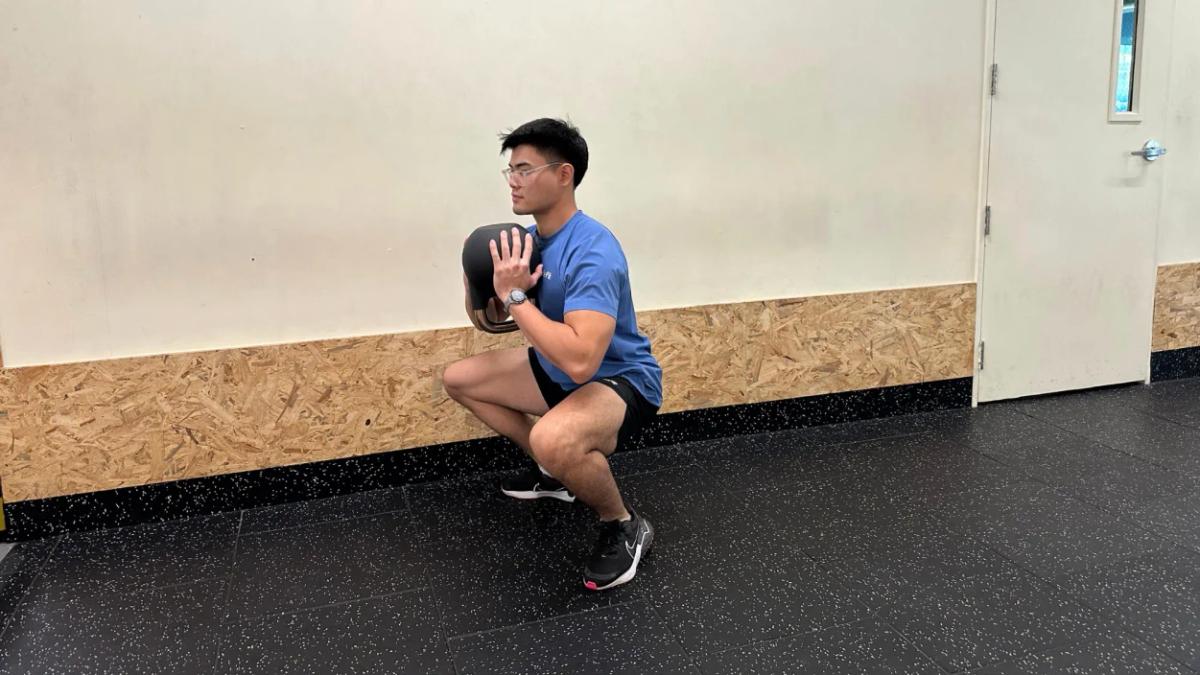
The Goblet Squat
- How to Do a Goblet Squat: To perform a goblet squat, stand with your feet approximately shoulder-width apart and hold a dumbbell or kettlebell vertically against your chest with both hands. Keep the weight close to your body, your chest lifted, and your core engaged.
Begin the movement by sitting your hips down and slightly back while bending your knees. Allow your knees to track naturally in line with your toes as you lower into the squat. Descend as far as your mobility allows while maintaining good posture and control.
At the bottom position, drive through your entire foot to return to standing, fully extending your hips and knees while maintaining an upright posture throughout the movement.
You know your form is correct when:
- Your heels remain firmly in contact with the floor throughout the movement.
- Your knees track in line with your toes without collapsing inward.
- Your chest stays lifted and your torso remains relatively upright.
- Your spine remains neutral and stable throughout the entire range of motion.
- You can squat to a depth that allows good control without losing posture.
- You feel the exercise primarily in your quadriceps, glutes, and core.
- Why the Goblet Squat is Effective for Squat Mechanics: For beginners, the goblet squat is one of the best ways to learn proper squat mechanics while improving mobility and core stability. This front-loaded loading pattern acts as a natural counterweight, which automatically assists the body in maintaining balance during deep hip flexion. The goblet squat teaches proper alignment of the ankles, knees, hips, and spine, creating movement patterns that transfer well into daily life.
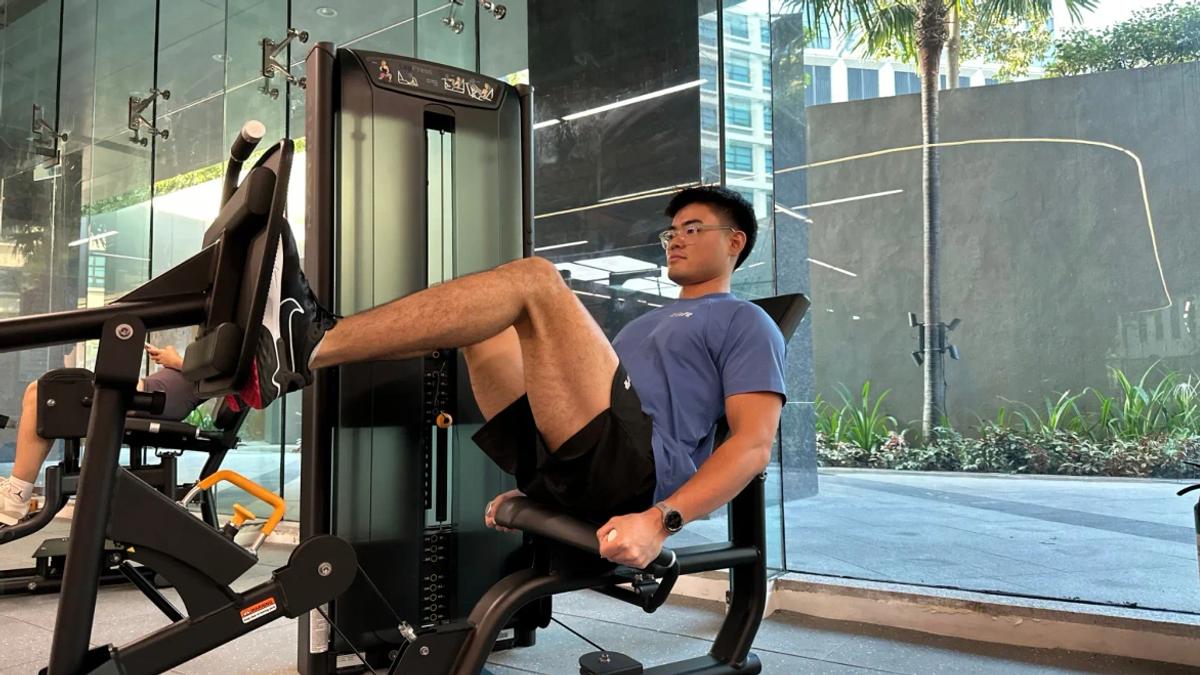
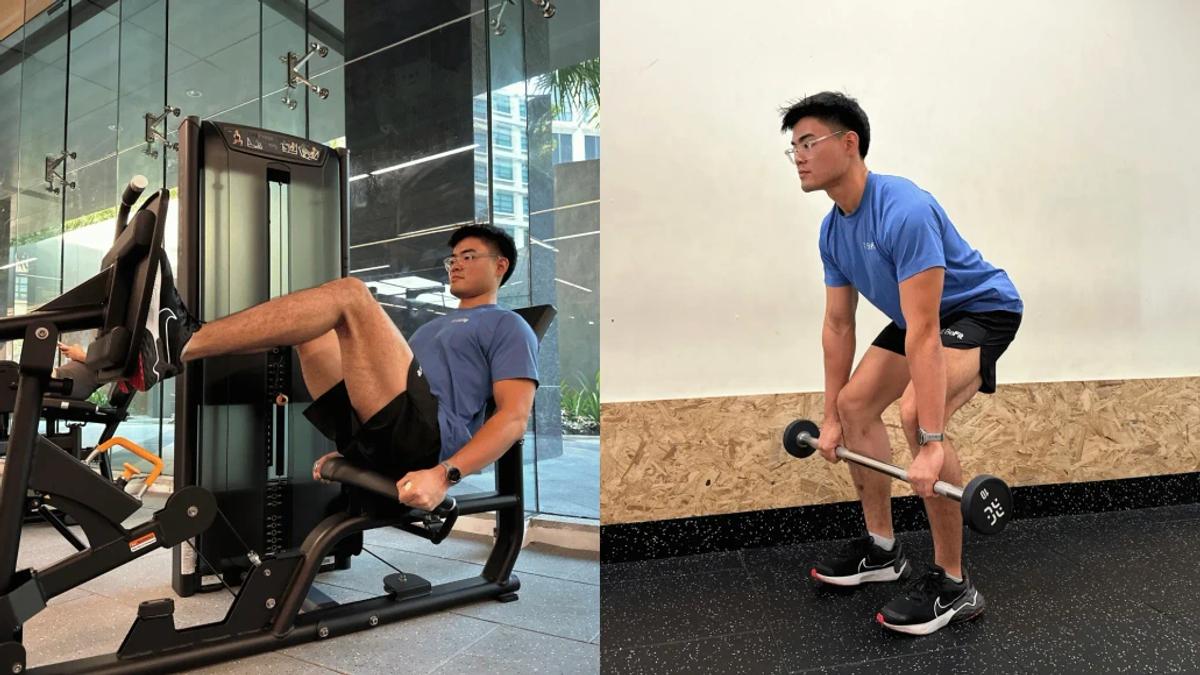
The Leg Press:
- How to Do a Leg Press: To perform a leg press, sit comfortably in the machine with your back and hips fully supported against the pad. Place your feet approximately shoulder-width apart on the platform, with your toes pointing slightly outward if comfortable.
Release the safety handles and slowly lower the platform by bending your knees and hips under control. Descend through a range of motion that allows you to maintain a neutral spine and keep your hips in contact with the seat. For most individuals, this occurs when the knees reach approximately a 90-degree angle or slightly deeper, depending on mobility and comfort.
Once you reach the bottom position, push through your entire foot to extend your knees and hips, driving the platform away until your legs are nearly straight. Maintain tension throughout the movement and avoid aggressively locking your knees at the top.
Perform each repetition with a controlled lowering phase and a smooth, powerful press back to the starting position.
You know your form is correct when:
- Your lower back and hips remain fully supported against the backrest throughout the movement.
- Your knees track in line with your toes without collapsing inward.
- Your feet stay flat on the platform from start to finish.
- You maintain control during both the lowering and pressing phases.
- Your pelvis remains stable without your tailbone lifting from the seat at the bottom position.
- You feel the exercise primarily in your quadriceps and glutes.
Why the Leg Press is Effective for Strength: The leg press allows beginners to safely build strength in the quadriceps and glutes while minimizing balance demands. This machine gym leg exercise provides a highly controlled environment and functions as an excellent alternative for those who are not yet comfortable with free-weight barbell squats. Because the machine stabilizes the path of motion, also allows progressive overload to be applied safely, which is one of the most important principles for building muscle and strength.
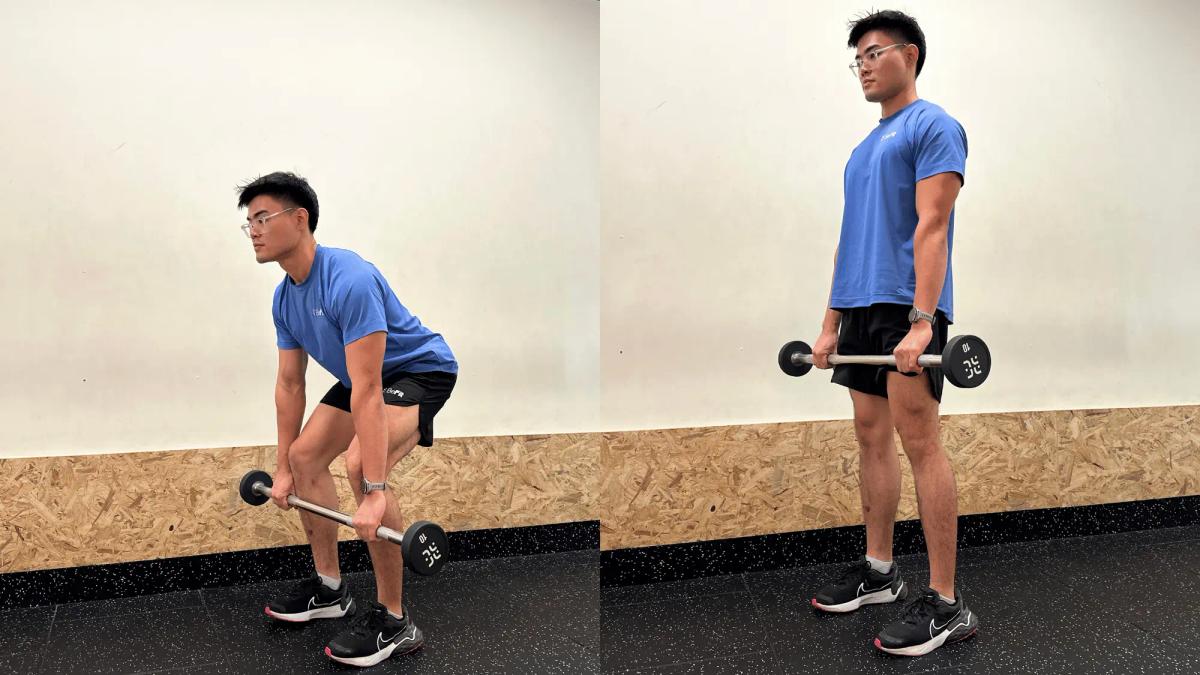
The Romanian Deadlift (RDL):
- How to Do a Romanian Deadlift: To execute a Romanian Deadlift, stand with feet hip-width apart holding weights in front of your thighs, then hinge forward by driving your hips backward while keeping your knees slightly bent and spine flat. Lower the weight close to your thighs and shins as your hips travel backward until you feel a comfortable stretch in the hamstrings while maintaining a neutral spine. Then drive your hips forward and contract your glutes to return to the starting position.
You know your form is correct when:
- Your spine remains neutral throughout the movement (not rounded or excessively arched).
- The weights stay close to your body during both the lowering and lifting phases.
- You feel tension primarily in your hamstrings and glutes rather than your lower back.
- Your hips move backward during the descent and forward during the ascent.
- Your neck stays in line with your spine rather than looking excessively up or down.
A common mistake is trying to lower the weight too far. The goal is not to touch the floor, but to move through a range of motion where you can maintain proper posture and tension in the hamstrings.
- Why the Romanian Deadlift is Effective for the Posterior Chain: The Romanian Deadlift is one of the most effective hamstring exercises for strengthening the hamstrings, glutes, and posterior chain. This specific weightlifting exercise is highly effective because it teaches the hip hinge pattern, an essential movement for daily activities and athletic performance. Proper hip hinge mechanics developed during the movement help protect the lower back and improve overall movement efficiency. This makes the RDL one of the most valuable lower body exercises for long-term health.
If you're new to these movements, having access to knowledgeable BeFit coaches and a supportive BeFit personal training environment can help you develop proper technique and confidence over time.
How Do Hamstring Exercises and Glute Training Strengthen the Posterior Chain?
No gym routine for legs is complete without dedicated hamstring exercises and glute training. The muscles on the back side of the body, known collectively as the posterior chain, play a crucial role in posture, balance, running, jumping, and spinal stability.Training these muscles helps create balanced strength throughout the body and improves overall movement quality.
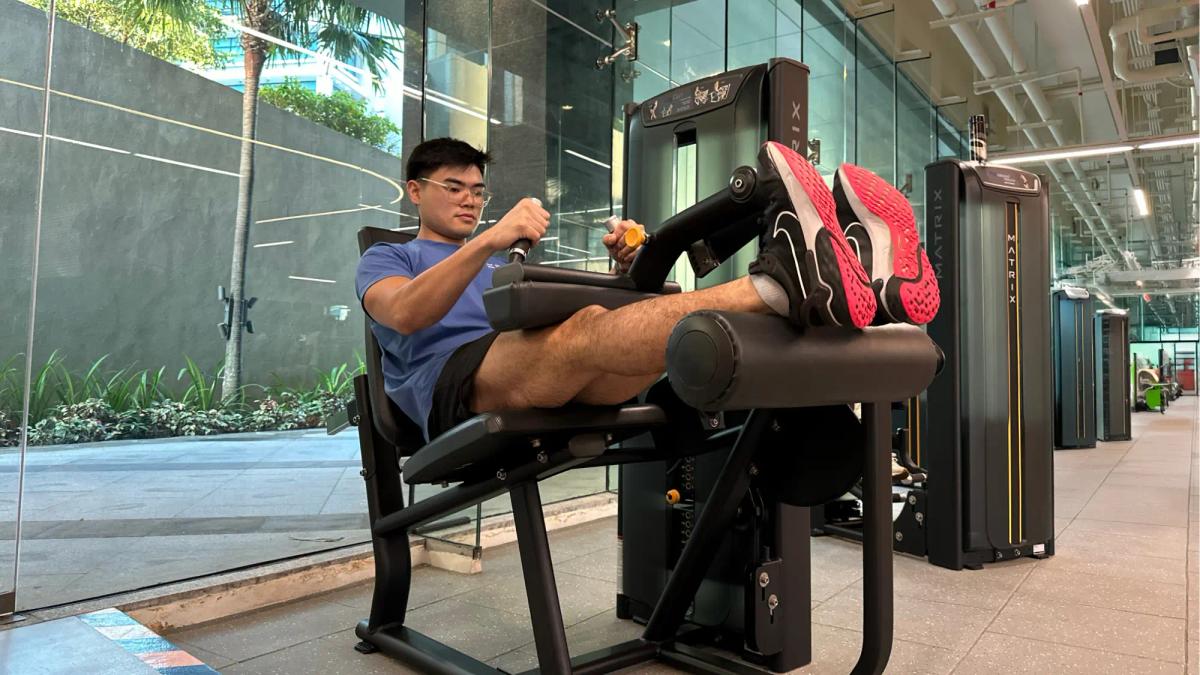
The Lying or Seated Leg Curl:
- How to Do a Leg Curl : To perform a lying or seated leg curl, adjust the machine so that your knees are aligned with the machine's pivot point and position the pad comfortably against the back of your lower legs, just above the ankles. Brace your core and curl the weight toward your glutes by bending your knees. Pause briefly at the top of the movement, then slowly lower the weight back to the starting position under control.
You know your form is correct when:
- Your hips remain stable and firmly in contact with the pad throughout the movement.
- The movement occurs primarily at the knee joint rather than through swinging or lifting the hips.
- You feel the exercise primarily in the hamstrings along the back of the thigh.
- You maintain smooth, controlled movement during both the lifting and lowering phases.
- Why the Leg Curl is Effective for Hamstring Isolation: The leg curl is one of the most effective hamstring exercises because it trains the hamstrings through their role as knee flexors, strengthening the muscles responsible for bending the knee.
Unlike exercises such as Romanian deadlifts or good mornings, leg curls place direct tension on the hamstrings while minimizing loading on the spine and lower back.
For beginners, athletes, and general fitness enthusiasts, leg curls can help improve hamstring strength, support balanced lower-body development, and contribute to better movement efficiency during activities such as running, jumping, and lifting.
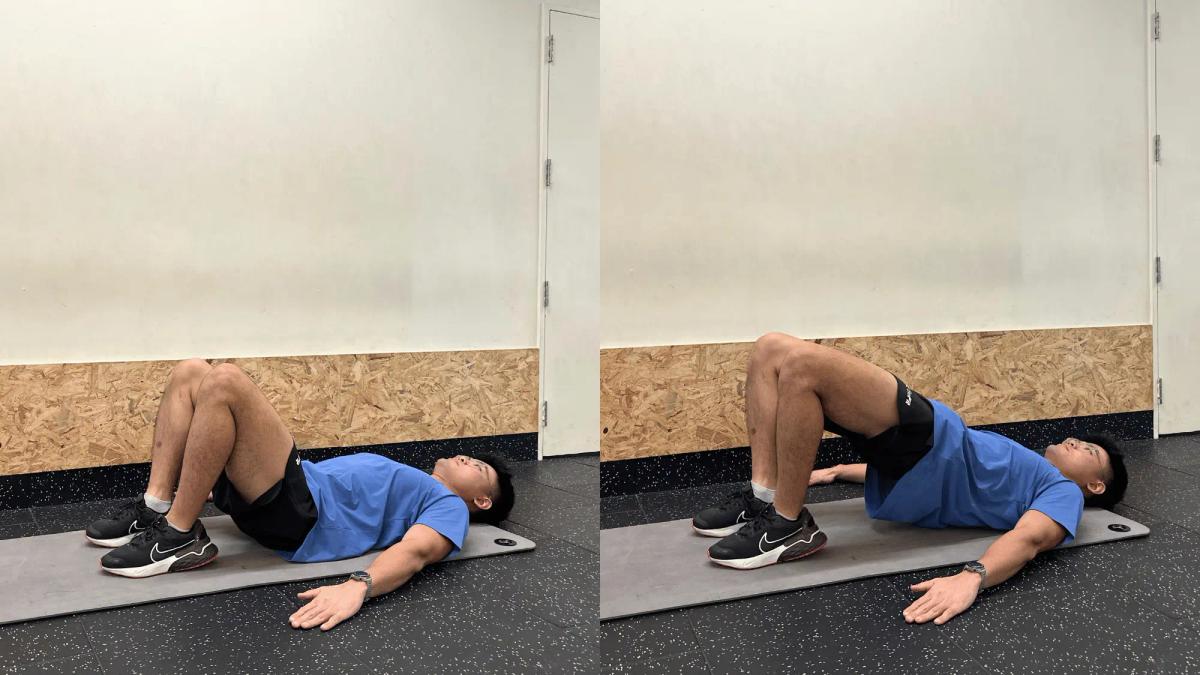
The Glute Bridge:
- How to Do a Glute Bridge: To execute a glute bridge, lie on your back with your knees bent, feet flat on the floor hip-width apart, and drive through your heels to lift your hips toward the ceiling until your body forms a straight line from knees to shoulders. Squeeze your glutes at the top before lowering your hips back down under control.
How you know your form is correct:
- Your hips rise and lower in a smooth, controlled manner.
- Your feet remain flat on the floor throughout the movement.
- Your knees stay aligned with your hips and feet rather than collapsing inward or flaring excessively outward.
- You maintain a neutral spine without excessively arching your lower back.
- You feel the exercise primarily in your glutes, with some assistance from the hamstrings and core.
- Why the Glute Bridge is Effective for Hip Stability: The glute bridge teaches proper glute activation and helps stabilize the hips and spine. By isolating hip extension without loading the spine, this exercise forces the gluteal muscles to fire efficiently. Strong glutes are essential for healthy movement patterns and help support other compound exercises such as squats and deadlifts.
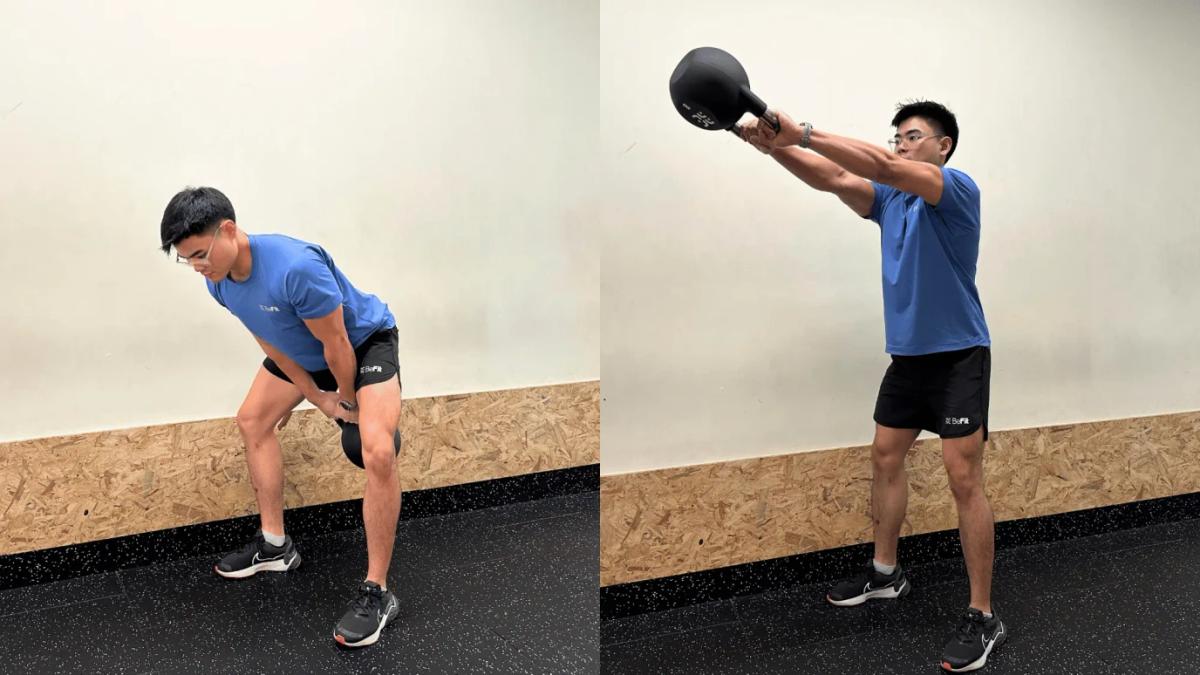
The Kettlebell Swing:
- How to Do a Kettlebell Swing: To perform a kettlebell swing, stand with your feet approximately shoulder-width apart and position the kettlebell slightly in front of you. Hinge at your hips while maintaining a neutral spine and grip the handle with both hands.
Begin by hiking the kettlebell back between your legs. From there, drive your hips forward explosively by extending your hips and squeezing your glutes. This powerful hip extension propels the kettlebell forward and upward to approximately chest height. Try not to lift the kettlebell with the shoulders and arms. The arms should act mainly as connectors between your body and the kettlebell, while the power comes from the hips.
As the kettlebell descends, allow it to return naturally between your legs while maintaining a strong hip hinge position. Absorb the force through your hips and hamstrings before immediately transitioning into the next repetition.
You know your form is correct when:
- The movement is generated primarily by explosive hip extension rather than pulling with your arms.
- Your spine remains neutral throughout the entire movement.
- Your shoulders stay packed and connected to your torso.
- The kettlebell follows a smooth and controlled arc to approximately chest height.
- You feel the exercise primarily in your glutes, hamstrings, and posterior chain.
- Your knees bend naturally but do not turn the movement into a squat.
- Why the Kettlebell Swing is Effective for Power: Once the hip hinge is mastered, kettlebell swings help develop dynamic lower-body power, coordination, and cardiovascular fitness simultaneously. The ballistic nature of the kettlebell swing trains the muscles to generate force rapidly while maintaining structural core integrity. The kettlebell swing also improves muscular endurance and elevates heart rate, making the exercise a highly efficient addition to lower body workouts.
How Do Single-Leg Exercises Improve Balance and Muscle Symmetry?
Most people naturally favor one side of the body more than the other. Single-leg exercises help improve balance, coordination, and overall movement quality.
Unilateral training is particularly valuable because it exposes strength imbalances that may otherwise go unnoticed.
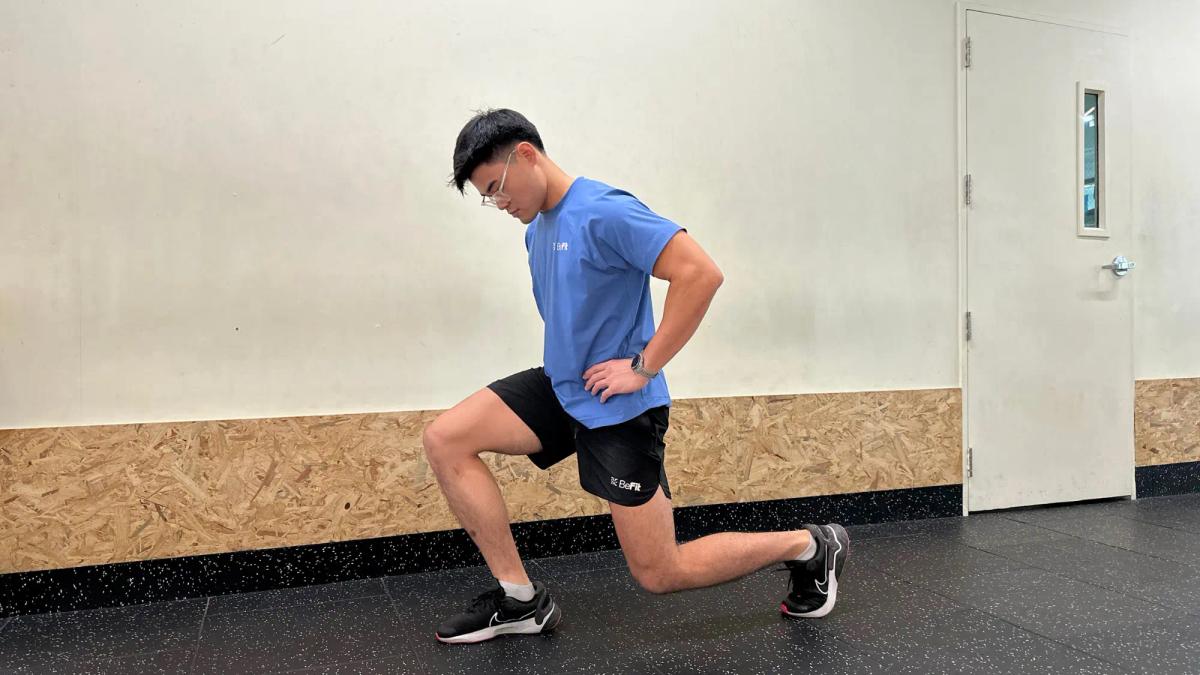
The Walking Lunge:
- How to Do a Walking Lunge: To execute a walking lunge, step forward with one leg and lower your hips until your back knee is just above the floor and your front thigh is parallel to the ground, then drive through your front heel to step forward into the next repetition. Keep your torso upright and your core engaged throughout the movement.
You know your form is correct when:
- Your front knee tracks in line with your toes without collapsing inward.
- Your front foot remains firmly planted on the ground throughout the movement.
- Your hips stay level and facing forward.
- Your torso remains upright with minimal forward lean.
- You maintain balance and control during both the lowering and stepping phases.
- You feel the exercise primarily in your quadriceps, glutes, and hamstrings.
- Why the Walking Lunge is Effective for Balance: Walking lunges challenge the quadriceps, glutes, and core while improving balance and stability.The unilateral pattern of the walking lunge forces the stabilizing muscles of the hips and core to fire continuously to maintain equilibrium. Walking lunges also promote a greater range of motion and functional strength that transfers well to sports and everyday life.
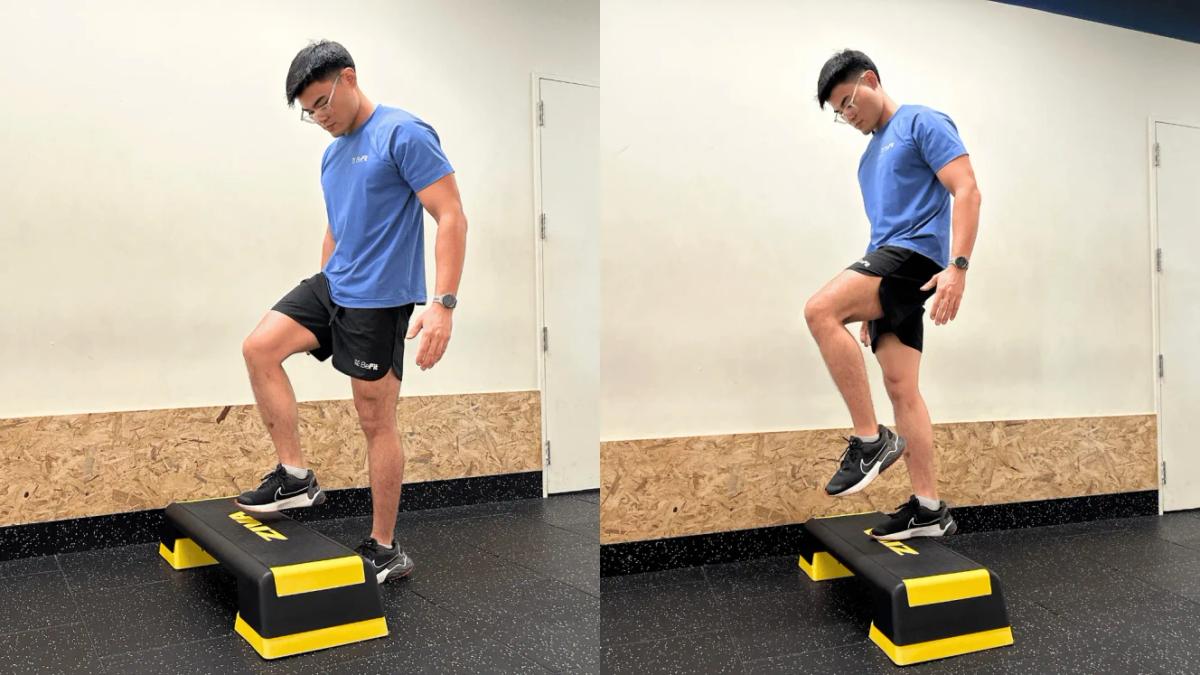
The Step-Up:
- How to Do a Step-Up: To execute a step-up, place one foot flat on a secure box or bench, drive through that front heel to lift your entire body upward until your stepping leg is straight, and lower yourself back down slowly under control. Minimize the amount of push-off from your trailing foot to ensure the leading leg does the work.
You know your form is correct when:
- Your working knee remains aligned with your toes throughout the movement.
- Your entire foot stays planted on the platform without the heel lifting.
- Your hips remain level and stable during both the ascent and descent.
- Your torso remains tall with only a slight natural forward lean.
- You control the lowering phase rather than dropping quickly back to the floor.
- You feel the exercise primarily in your glutes, quadriceps, and hamstrings of the working leg.
- Why the Step-Up is Effective for Single-Leg Strength: Step-ups mimic everyday activities such as climbing stairs and are highly effective for building single-leg strength and coordination. This unilateral box exercise isolates one leg at a time to correct muscle imbalances between limbs without overloading the spine. Because step-ups are low-impact and easy to modify, they are an excellent exercise for beginners and older adults alike.
Why Should You Include Isolation Exercises at the End of a Leg Workout?
You should include isolation exercises at the end of a leg workout to target smaller muscle groups, correct muscle imbalances, and safely accumulate training volume without overloading the spine. The final components of a well-rounded gym routine for legs focus on smaller muscle groups and targeted muscle development.
Although compound movements should remain the priority, isolation exercises provide additional work to ensure balanced muscular development.
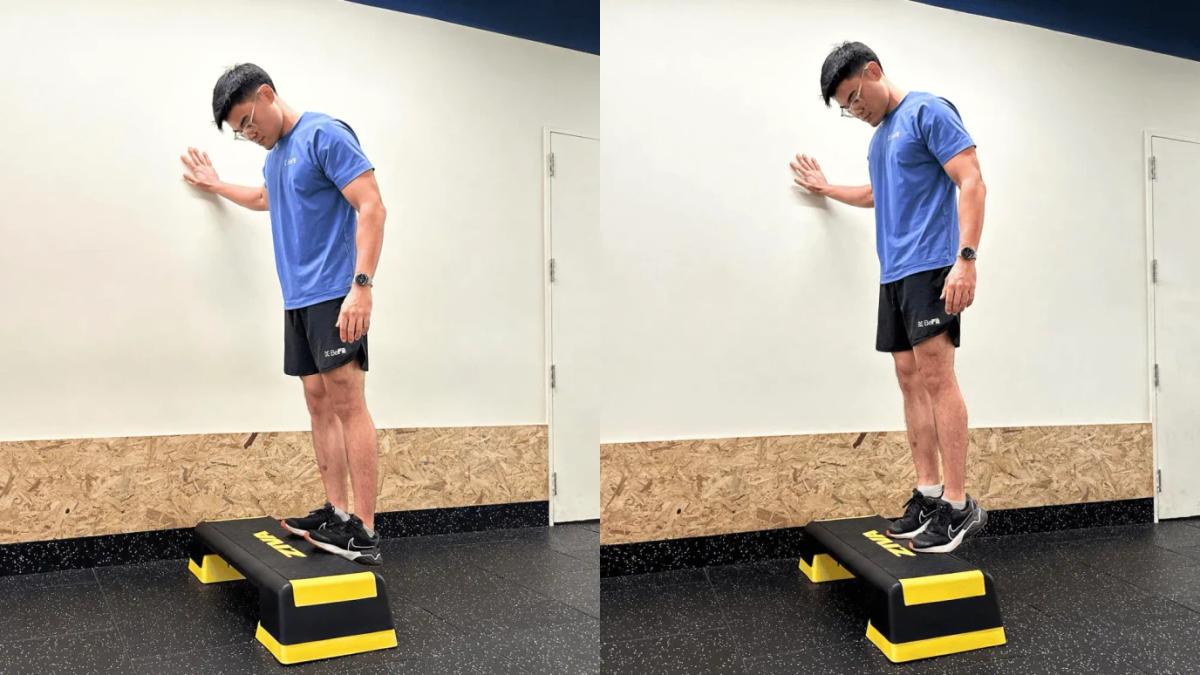
The Standing Calf Raise:
- How to Do a Standing Calf Raise: To perform a standing calf raise, stand with the balls of your feet securely positioned on the edge of a step, platform, or calf raise machine, allowing your heels to move freely. Maintain an upright posture and lightly engage your core for stability.
Lower your heels under control below the level of the platform until you feel a comfortable stretch in your calf muscles. From there, push through the balls of your feet and raise your heels as high as possible, fully contracting your calves at the top of the movement. Pause briefly before slowly lowering back to the starting position.
Focus on moving through a full range of motion and controlling both the lifting and lowering phases of the exercise.
You know your form is correct when:
- Your knees remain stable and extended throughout the movement without excessive bending.
- Your body moves vertically rather than rocking forward or backward.
- Your ankles remain aligned and do not roll excessively inward or outward.
- You achieve a noticeable stretch at the bottom and a strong calf contraction at the top.
- The movement is controlled throughout the entire range of motion.
- You feel the exercise primarily in your calf muscles rather than in your knees or lower back.
- Why the Standing Calf Raise is Effective for Ankle Stability: Strong calves contribute to ankle stability, walking efficiency, and lower-body power. Calf training can be performed using a dedicated calf raise machine, a Smith machine, a leg press machine, or even a simple step or platform. Healthy calf muscles are particularly important for runners and individuals involved in sports requiring acceleration and jumping.
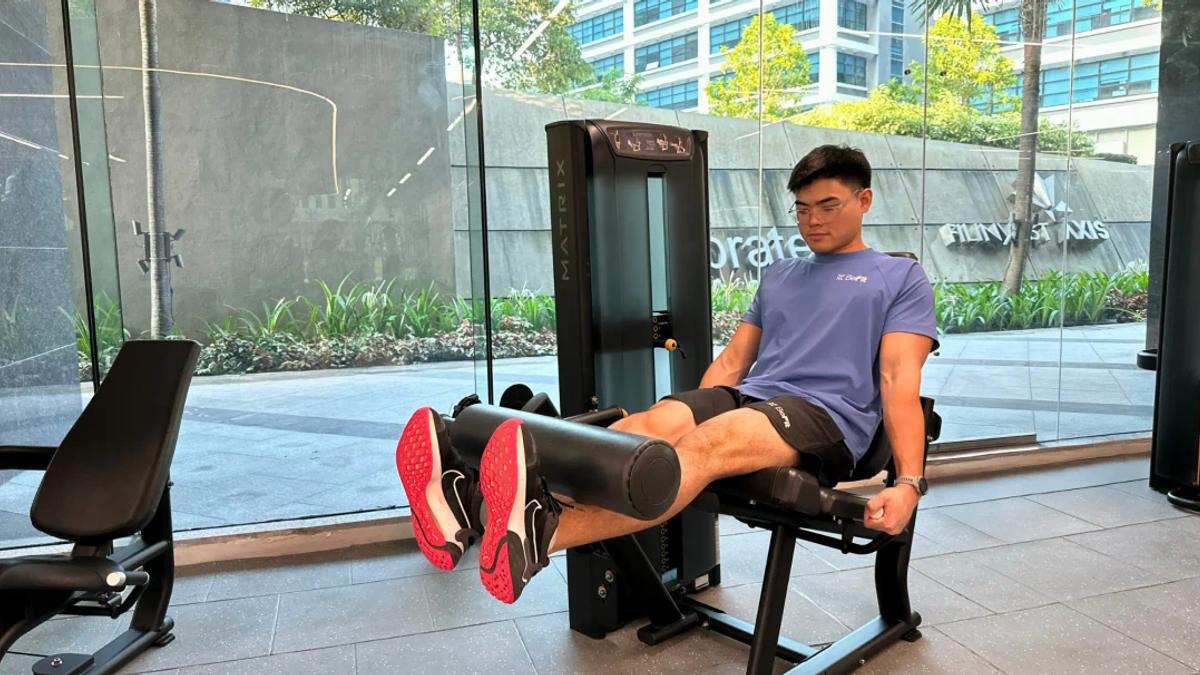
The Leg Extension:
- How to Do a Leg Extension: To perform a leg extension, sit in the machine with your back fully supported against the backrest and your hips positioned comfortably in the seat. Adjust the machine so that the pivot point aligns with your knee joint and the roller pad rests comfortably against the front of your lower legs, just above the ankles.
Grip the handles or sides of the seat for stability. Keeping your torso still, contract your quadriceps to extend your knees and raise the weight until your legs are nearly straight. Pause briefly at the top while maintaining tension in the muscles, then slowly lower the weight back to the starting position under control.
Avoid using momentum or allowing the weight stack to drop quickly between repetitions.
You know your form is correct when:
- Your hips remain firmly planted against the seat throughout the movement.
- Your knees align with the machine's pivot point.
- Your movement is smooth and controlled during both the lifting and lowering phases.
- Your torso remains stable without leaning backward or forward.
- You feel the exercise primarily in your quadriceps (the muscles on the front of the thighs).
- You can maintain tension throughout the entire range of motion without swinging the weight.
- Why the Leg Extension is Effective for Quadriceps Isolation: The leg extension provides additional quadriceps work after the larger movements have been completed. This open-kinetic-chain exercise removes hip involvement to isolate the four muscles of the anterior thigh. The leg extension is especially useful for improving muscle awareness and strengthening the front of the thigh. Used correctly, this exercise can complement compound movements and help develop complete lower-body strength.
Frequently Asked Questions About Leg Training Exercises
What is the most effective workout plan for legs?
For most beginners, the most effective gym routine for legs prioritizes frequency over volume. Performing three to five key leg training exercises two or three times per week provides enough stimulus to build strength while allowing adequate recovery.
A combination of one squat pattern, one hinge movement, and one unilateral exercise creates an efficient structure for long-term progress.
How do I stop my knees from hurting during a gym leg exercise?
Experiencing discomfort during a gym leg exercise doesn't necessarily mean you should stop training, but it is a signal that something may need to be adjusted. In many cases, knee discomfort is related to factors such as exercise technique, training load, mobility restrictions, or muscular imbalances rather than the exercise itself.
From a fitness professional's perspective, the priority should be to improve movement quality and gradually build strength around the knee joint. This includes strengthening the quadriceps, glutes, and hamstrings through well-chosen leg workout exercises while ensuring proper control throughout the movement.
Exercises such as box squats, glute bridges, Romanian deadlifts, step-ups, and controlled leg presses can help develop lower-body strength without placing unnecessary stress on the knees. Dedicated hamstring exercises, including seated leg curls and Romanian deadlifts, also contribute to balanced muscular development and better support for the knee joint.
Pay attention to maintaining a stable foot position, keeping the knees tracking naturally over the toes, and using loads that allow you to move with good form and control. Progressing too quickly or training through pain can often make symptoms worse.
Most importantly, discomfort should not be ignored. If knee pain persists, worsens, or interferes with daily activities, it is advisable to consult our BeFit qualified physiotherapist to determine the underlying cause and receive individualized guidance.
How much weight should a beginner use for leg training?
Start with a weight that allows you to perform 8–12 repetitions with good form and control.
The final repetitions should feel challenging, but technique should never break down. If you find yourself shaking or losing your balance, the weight is too heavy for your current level of stabilization.
Starting lighter than you think necessary is often a smart strategy for building confidence and protecting your joints.
Can I get results from lower body workouts if I don't use a barbell?
Absolutely.
While barbell exercises are valuable tools, they are not a requirement for building strength, muscle, or improving overall fitness. In fact, many beginners achieve excellent results using dumbbells, resistance machines, cables, kettlebells, and bodyweight movements.
From a fitness professional's perspective, the effectiveness of lower body workouts depends far more on consistency, exercise selection, and progressive overload than on the specific equipment used. As long as the muscles are challenged appropriately and training variables are progressed over time, significant improvements in strength, muscle development, and movement quality can be achieved.