The 8 best Pilates exercises for beginners to build core stability and strength are The Hundred, The Roll-Up, The Leg Circle, Single-Leg Stretch, The Saw, The Pilates Plank, The Bird-Dog, and The Pelvic Tilt. Practicing these fundamental movements 2 to 3 times per week for 20 to 45 minutes strengthens deep stabilizing muscles, improves posture, and protects the spine without placing excessive stress on your joints.
Whether your goal is better posture, lower back relief, increased flexibility, or enhanced athletic performance, regular Pilates builds a resilient foundation for long-term fitness. To support your journey, BeFit gym offers guided Pilates classes designed to help beginners build core strength, mobility, and confidence in a supportive environment.
Why Core Stability is the Foundation of Strength
True core strength extends far beyond visible abdominal muscles. Your core comprises a deep network of muscles surrounding the abdomen, lower back, pelvis, and diaphragm that work together to stabilize your spine during movement.
Key Benefits of Deep Core Stability:
- Improved Force Transfer: Safely transfers energy between your upper and lower body during lifts, sports, and daily activities.
- Enhanced Posture & Alignment: Deep muscle engagement prevents excessive lower back arching and slouching.
- Injury Prevention: Reduces unnecessary stress and strain on the lumbar spine and surrounding joints.
- Supports Sustainable Weight Loss: While Pilates burns fewer calories than high-intensity cardio, it increases lean muscle activation and movement efficiency. Paired with a balanced nutrition plan, Pilates makes an excellent complement to a long-term fitness program.
Whether practicing mat-based exercises or using a Pilates Reformer, core principles—breathing, concentration, control, precision, centering, and flow—create efficient movement patterns that transfer directly to strength training, sports, and daily life.
8 Essential Pilates Exercises for Beginners
These eight Pilates exercises have been carefully selected because they develop the key components of a strong, functional core. Rather than focusing only on the visible abdominal muscles, each exercise strengthens the deeper muscles responsible for stabilizing your spine, improving posture, enhancing balance, and supporting efficient movement.
Together, these movements target the essential pillars of core function: endurance, spinal articulation, hip mobility, pelvic control, rotational strength, shoulder stability, cross-body coordination, and neutral spine awareness. Mastering these fundamentals creates a solid foundation for everyday movement, strength training, sports performance, and injury prevention.
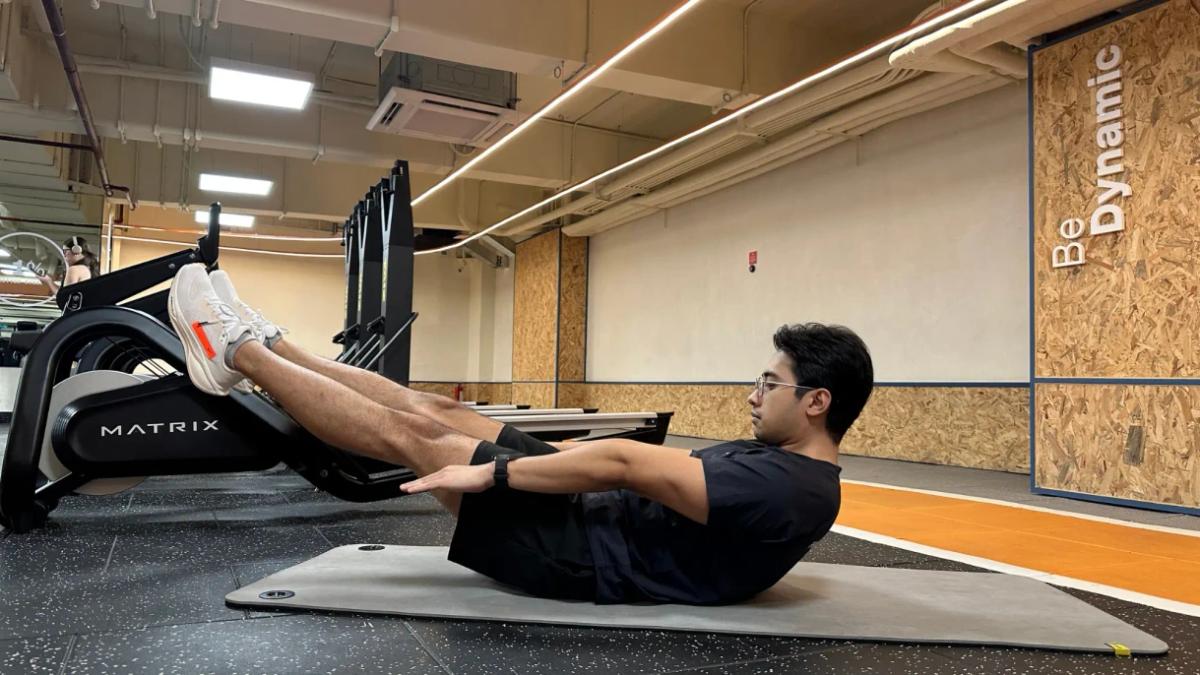
1. The Hundred:
The Hundred is one of the most recognizable Pilates workouts and is traditionally used to begin a session. It raises body temperature, activates the deep abdominal muscles, improves breathing coordination, and builds core endurance while preparing the body for more advanced movements.
How to Do The Hundred: To perform The Hundred, lie on your back with your legs in a tabletop position (knees bent at 90 degrees) and lift your head, neck, and shoulders off the mat. Extend your arms straight alongside your body at hip height, then pump your arms in small, controlled beats while inhaling for 5 beats and exhaling for 5 beats for a total of 100 beats.
You know your form is correct when:
- Your lower back remains pressed flat against the mat throughout all 100 beats of The Hundred.
- Your shoulder blades stay lifted completely off the floor with your neck long and eyes looking toward your knees.
- Your arms pump in tight, controlled beats from the shoulders while your legs stay completely still in tabletop position.
2. The Roll-Up:
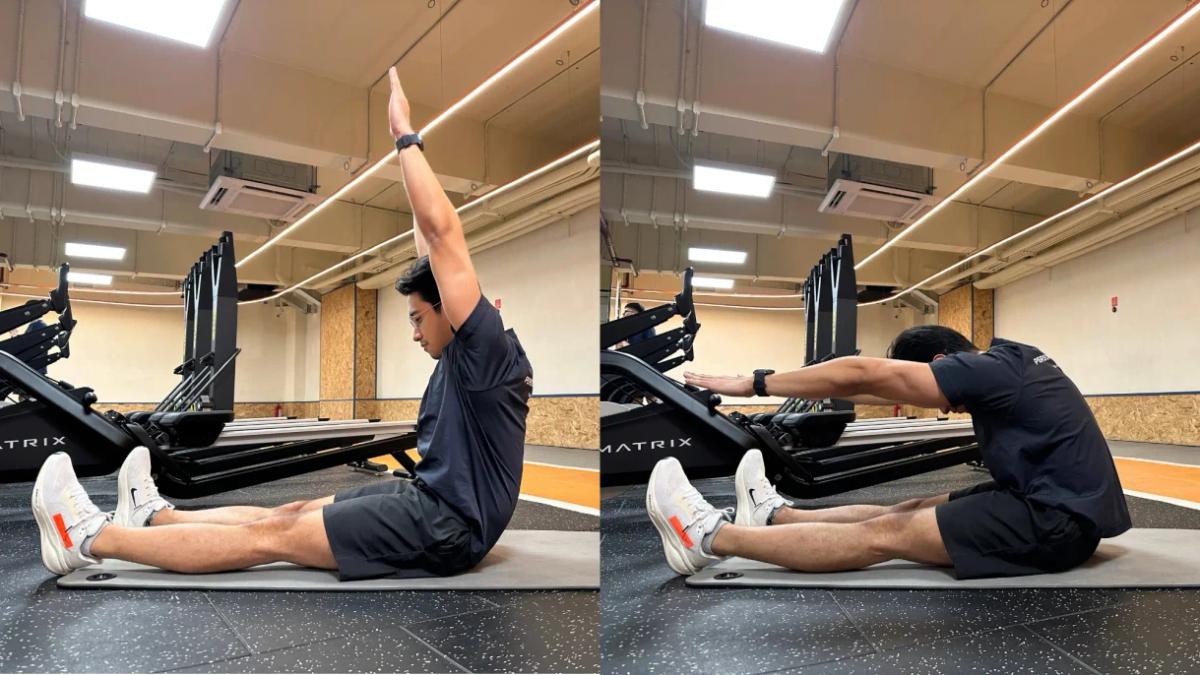
For beginners practicing Pilates, the Roll-Up is one of the fundamental Pilates exercises for improving spinal mobility and core control. Unlike a traditional sit-up, it teaches you to move one vertebra at a time, improving flexibility while strengthening the abdominal muscles through a full range of motion.
How to Do The Roll-Up: To perform the Roll-Up, lie flat on your back with your legs extended and arms overhead. Exhale and roll your torso upward one vertebra at a time until you fold over your legs, then inhale at the top, and exhale to roll back down to the floor with slow, vertebra-by-vertebra control.
You know your form is correct when:
- Your spine curves and peels off the mat sequentially, one vertebra at a time, during both the lift and lower phases of the Roll-Up.
- Your feet stay pressed flat against the mat without lifting off the floor as your upper body rolls forward.
- Your shoulders stay pulled down away from your ears, ensuring your abdominals do the work instead of your neck or hip flexors.
3. The Leg Circle:
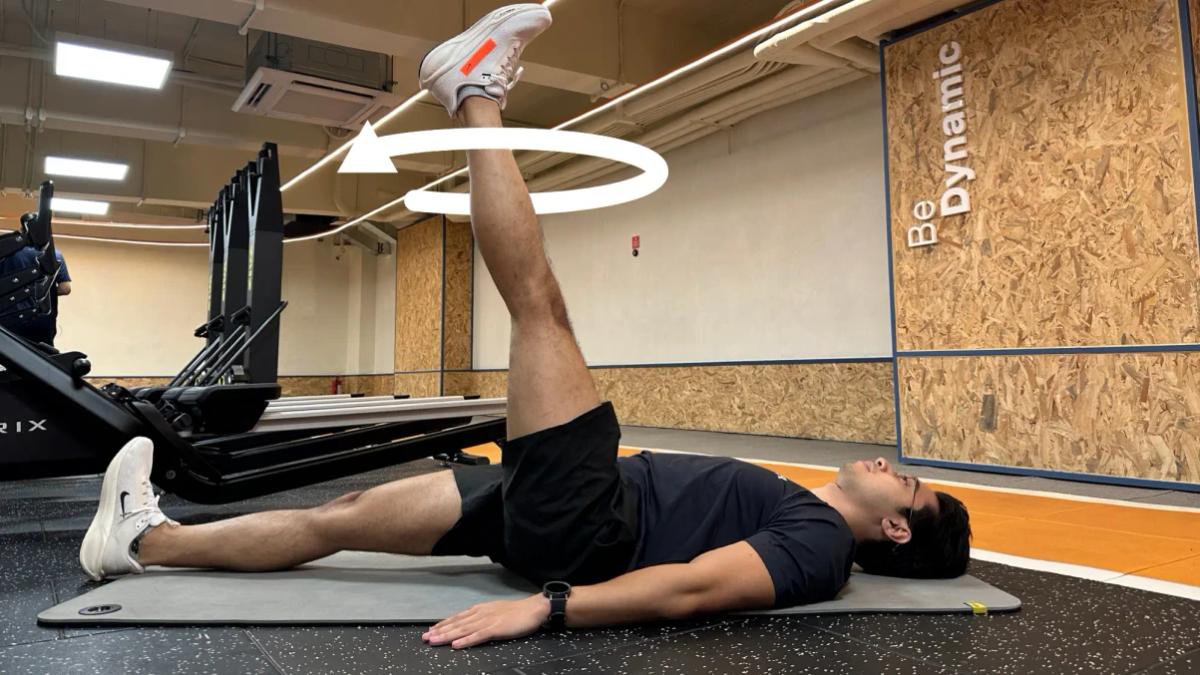
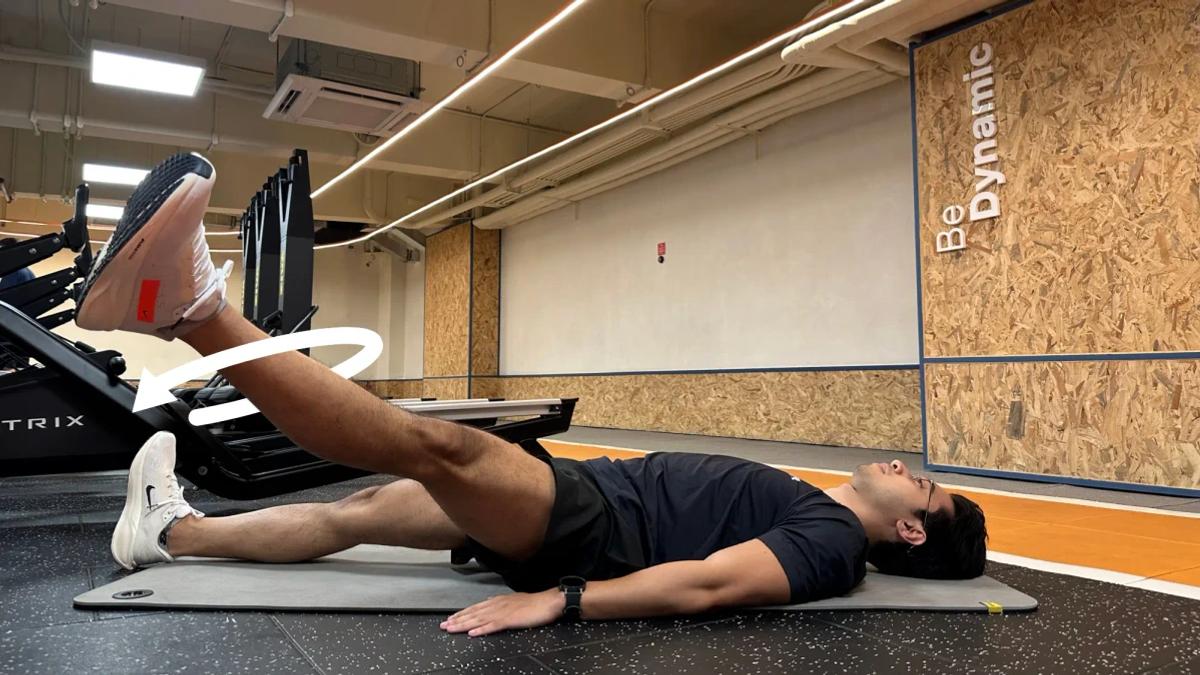
The Leg Circle develops hip mobility while teaching your core to stabilize the pelvis during leg movement. This improves coordination, pelvic control, and lower-body stability; important qualities for walking, running, squatting, and athletic performance.
How to Do The Leg Circle: To perform the Leg Circle, lie flat on your back with your arms at your sides and extend one leg straight up toward the ceiling. Draw controlled circles with your raised foot, initiating the movement from your hip joint while keeping your pelvis completely still, completing 5 circles in each direction per leg.
You know your form is correct when:
- Your pelvis remains completely still and level on the floor while your leg performs the Leg Circle.
- Your lower back stays in constant, stable contact with the mat throughout the entire rotation.
- You feel the muscular work deep inside your hip stabilizers, not as strain in your lower back or thigh.
4. Single-Leg Stretch:
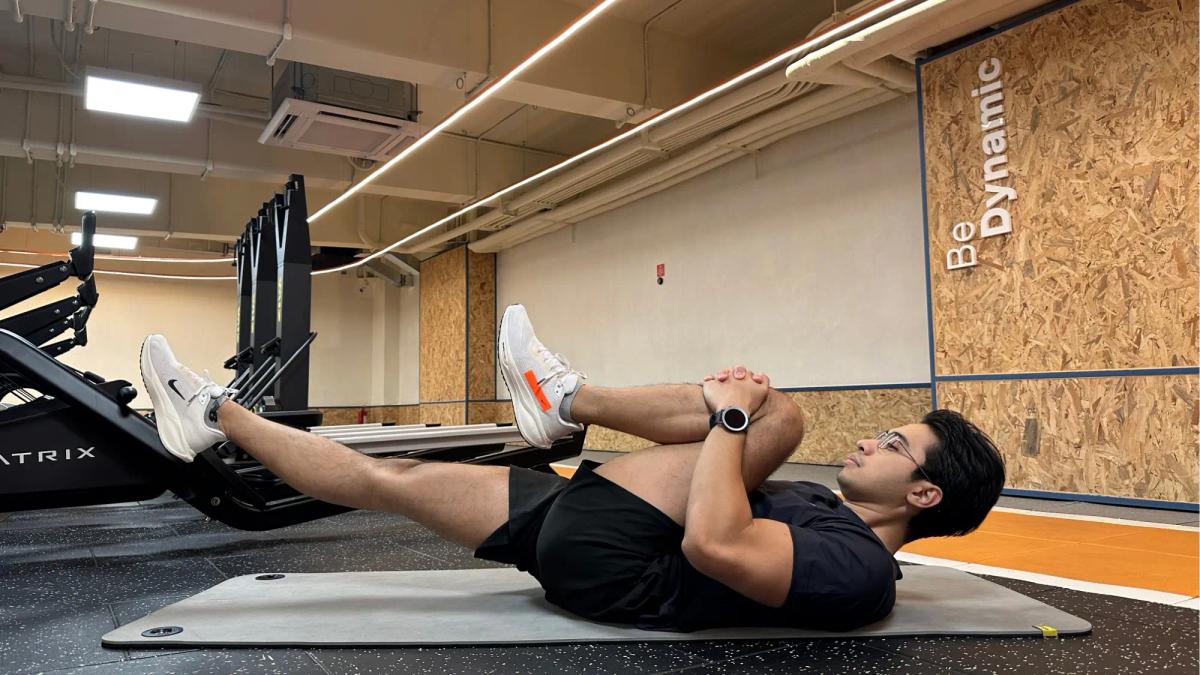
The Single-Leg Stretch is one of the most effective Pilates workouts for developing lower abdominal strength while improving coordination and core stability during movement.
How to Do the Single-Leg Stretch: To perform the Single-Leg Stretch, lie on your back, lift your head and shoulders, and pull both knees to your chest. Extend one leg out at a 45-degree angle while pulling the opposite knee in, alternating legs in a smooth, breathing-coordinated rhythm for 8 to 10 reps per side.
You know your form is correct when:
- Your lower back remains pressed firmly into the mat while your legs alternate during the Single-Leg Stretch.
- Your extended leg holds a steady 45-degree angle from the floor without dropping or sagging toward the mat.
- Your shoulder blades stay lifted completely off the floor, keeping the muscular tension in your lower abdominals rather than your neck.
5. The Saw:
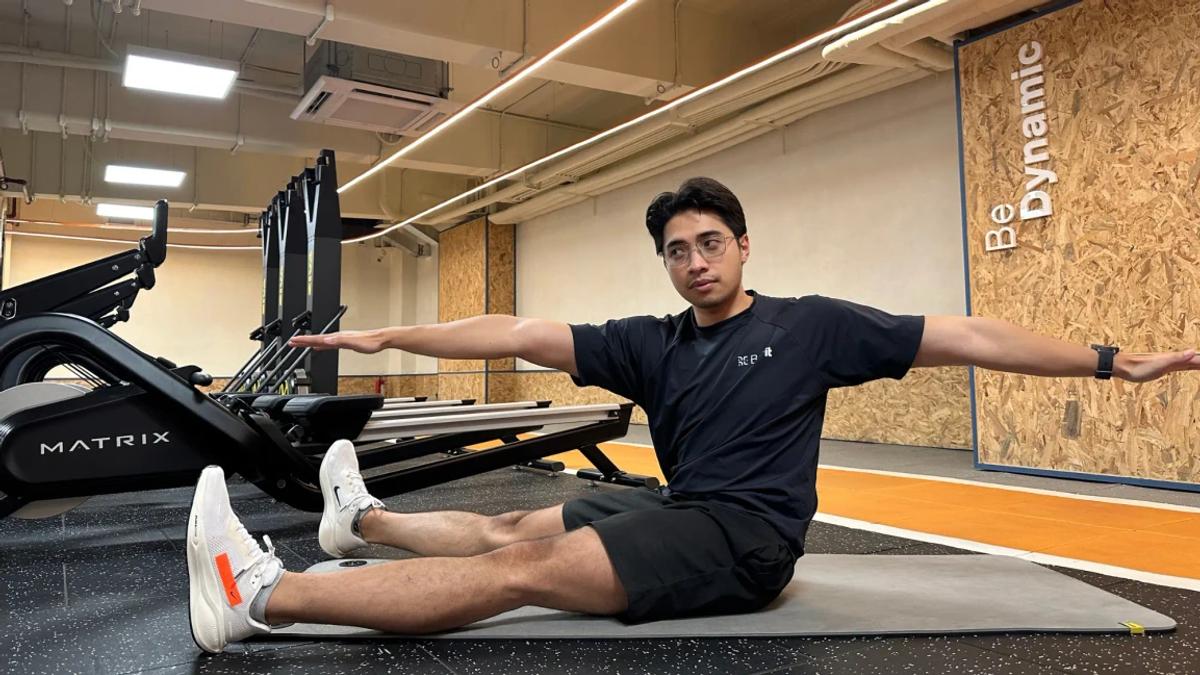
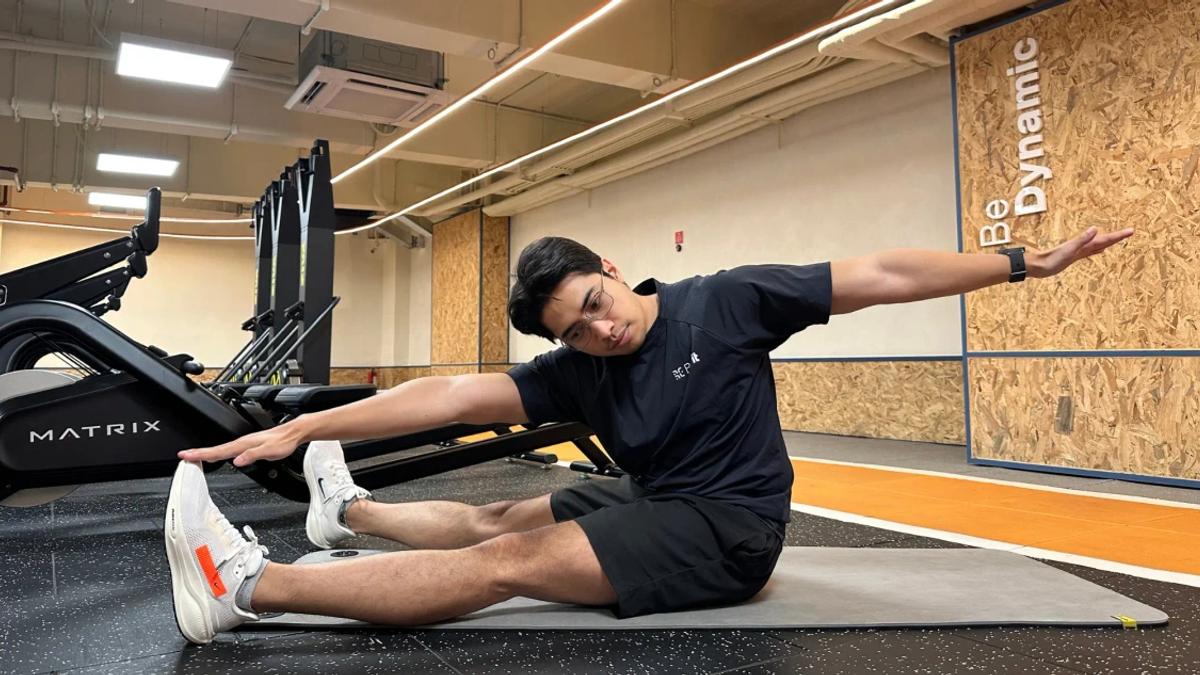
The Saw combines spinal rotation with hamstring flexibility, helping improve thoracic mobility while strengthening the oblique muscles. This exercise is particularly beneficial for people who spend long hours sitting or experience stiffness after heavy lifting.
How to Do The Saw: To perform the Saw, sit upright with your legs extended slightly wider than your hips and arms out at shoulder height. Rotate your torso to one side, reach your opposite hand past your little toe in a gentle pulsing motion, then return to center and repeat on the other side.
You know your form is correct when:
- Both of your sitting bones stay pressed equally into the floor as your torso rotates during the Saw.
- Your rotation originates from your waist and middle back, keeping your legs completely straight and flat against the mat.
- You feel the stretch and muscle engagement across your obliques and upper back rather than your lower back.
6. The Pilates Plank:
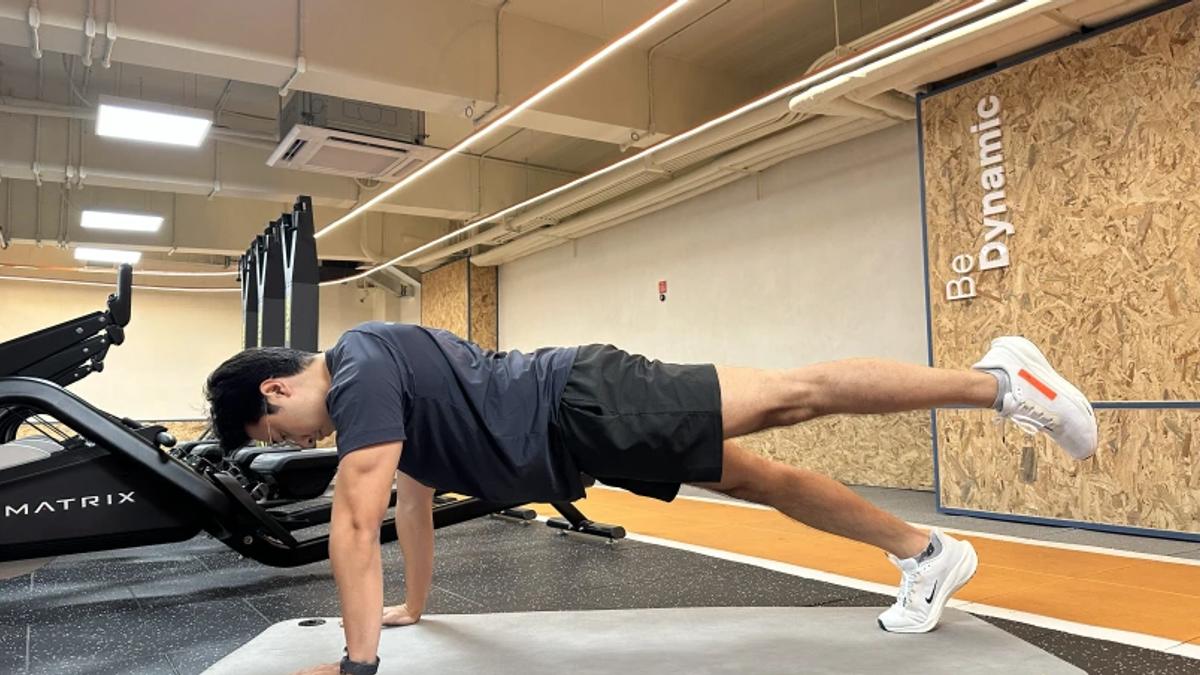
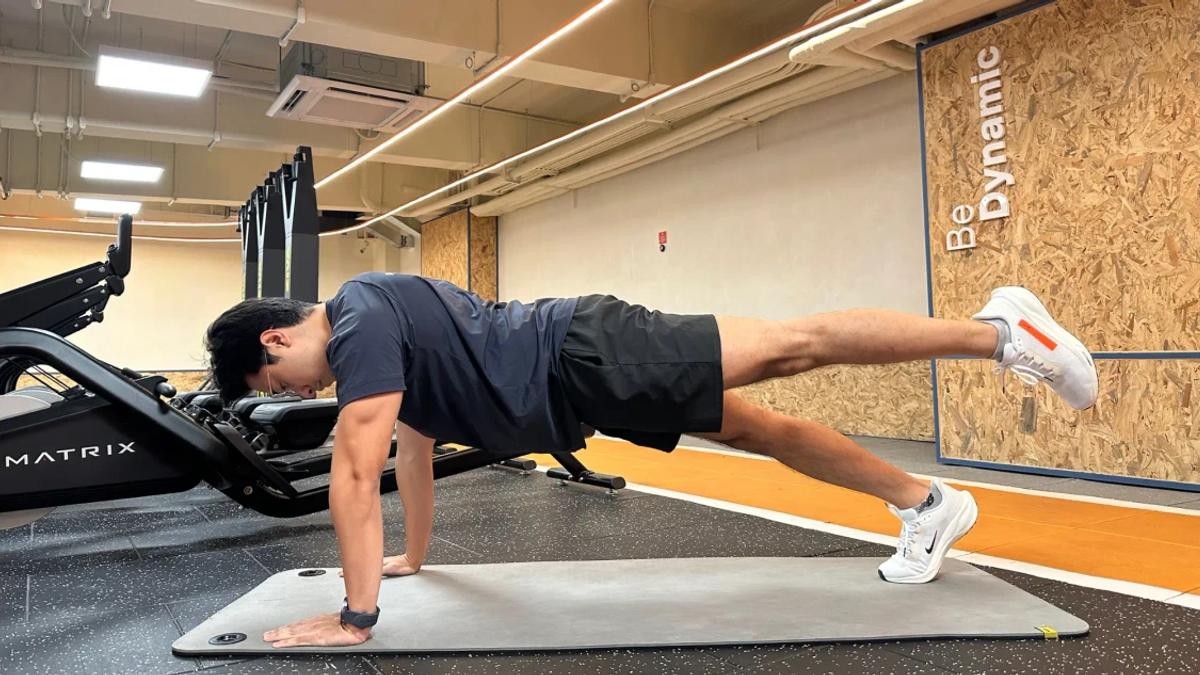
The Pilates Plank develops total-body stability by strengthening the shoulders, core, glutes, and pelvic floor simultaneously. Unlike a standard plank, the emphasis is on maintaining proper alignment and full-body control throughout the hold.
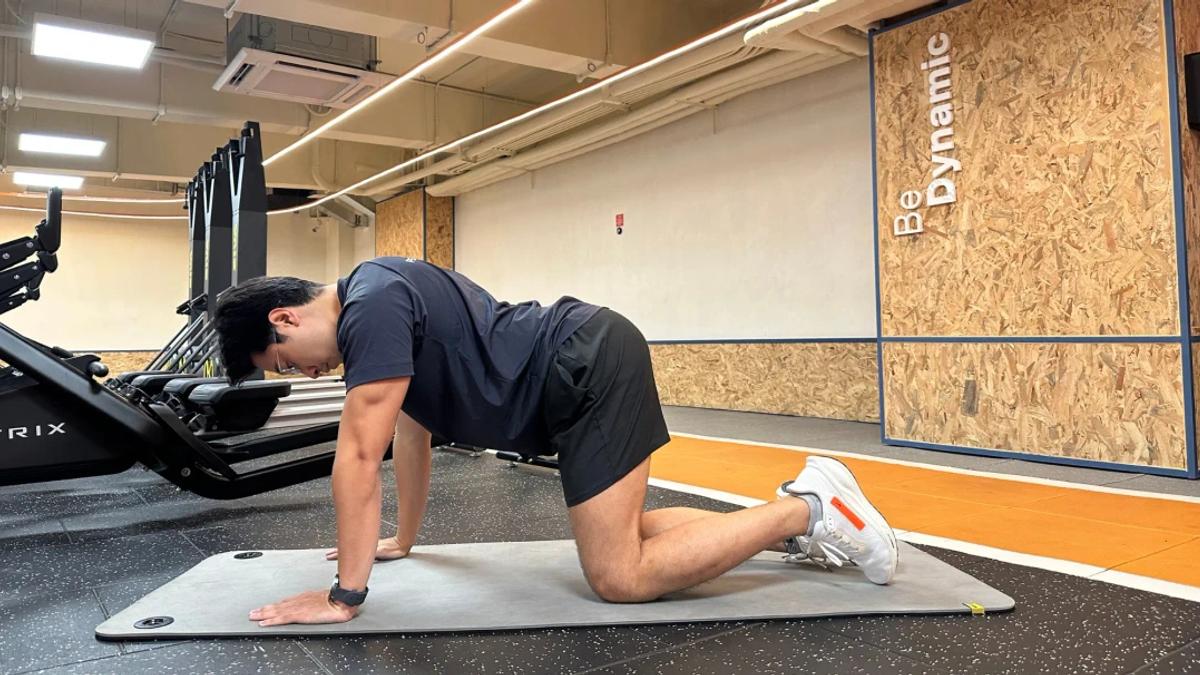
How to Do The Pilates Plank: To perform the Pilates Plank, start on your hands and knees, then step both feet back to form a straight, diagonal line from your head to your heels. Actively pull your shoulder blades down your back, lift your pelvic floor upward, and hold the position with steady breathing.
You know your form is correct when:
- Your body forms a perfectly straight diagonal line from your head to your heels without your hips sagging or hiking.
- Your shoulder blades are pulled down and flat against your ribcage, preventing your upper back from winging or rounding.
- You feel your core, glutes, and shoulders working equally while your pelvic floor remains actively lifted.
7. The Bird-Dog:
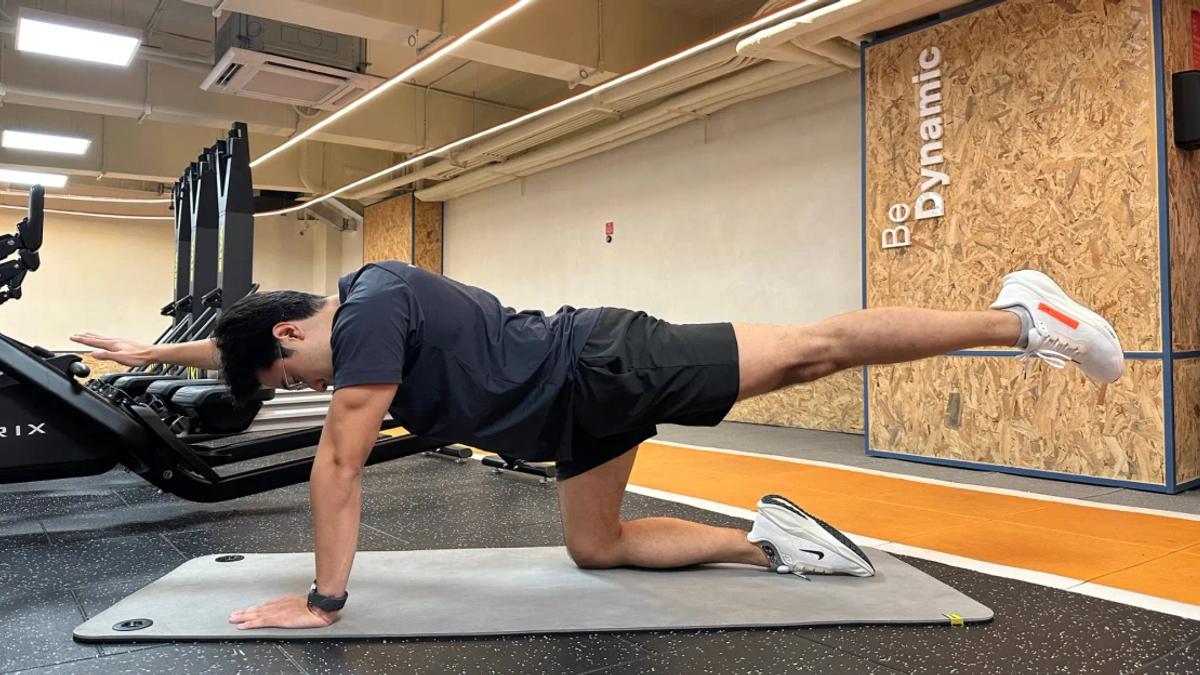
The Bird-Dog is one of the safest and most effective exercises for improving spinal stability, balance, and cross-body coordination. It strengthens the deep spinal muscles, glutes, and core while teaching the body to remain stable during movement.
How to Do The Bird-Dog: To perform the Bird-Dog, start on all fours with a neutral spine, then extend your opposite arm and leg parallel to the floor. Squeeze your glute to hold the extension for 2 to 3 seconds, then return to the starting position with control and switch sides.
You know your form is correct when:
- Your pelvis remains level and square to the floor as your opposite arm and leg extend during the Bird-Dog.
- Your lower back stays flat and neutral, avoiding any sagging or arching as you reach your limbs.
- You feel the muscle activation in the glute of your extended leg and your deep spinal muscles without twisting your torso.
8. The Pelvic Tilt:
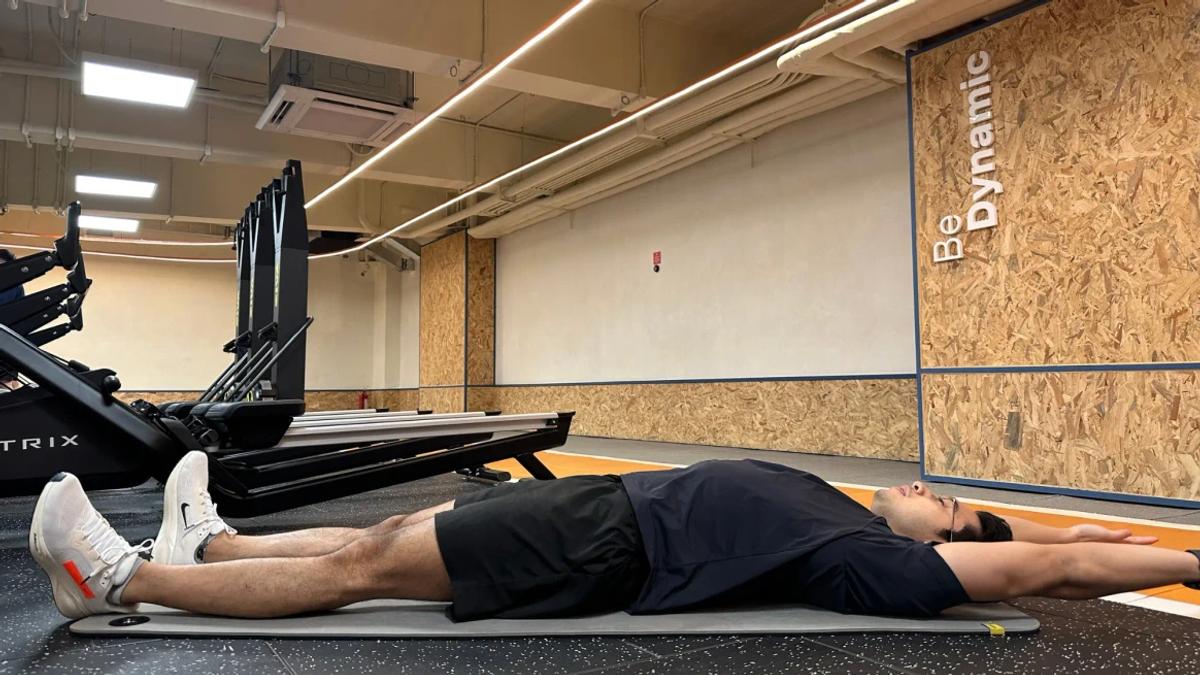
The Pelvic Tilt is often the first movement taught in Pilates for beginners because it develops awareness of spinal alignment and teaches how to activate the deep abdominal muscles. Learning to control pelvic position creates a safer and stronger foundation for lifting, bending, and everyday movement.
How to Do The Pelvic Tilt: To perform the Pelvic Tilt, lie on your back with your knees bent and feet flat on the floor, hip-width apart. Exhale to gently flatten your lower back completely into the mat by tilting your pelvis backward, then inhale to return your spine to its natural, slightly arched neutral position.
You know your form is correct when:
- Your pelvis rotates smoothly on its axis to flatten your spine without lifting your glutes or hips off the floor.
- You feel the muscle engagement purely in your lower abdominals, while your shoulders and neck remain completely relaxed.
- Your knees stay aligned hip-width apart without bowing outward or collapsing inward during the movement.
What Is the Difference Between Mat Work and the Pilates Reformer?
Both mat Pilates and Reformer Pilates share the same core principles but differ in equipment and resistance mechanics.
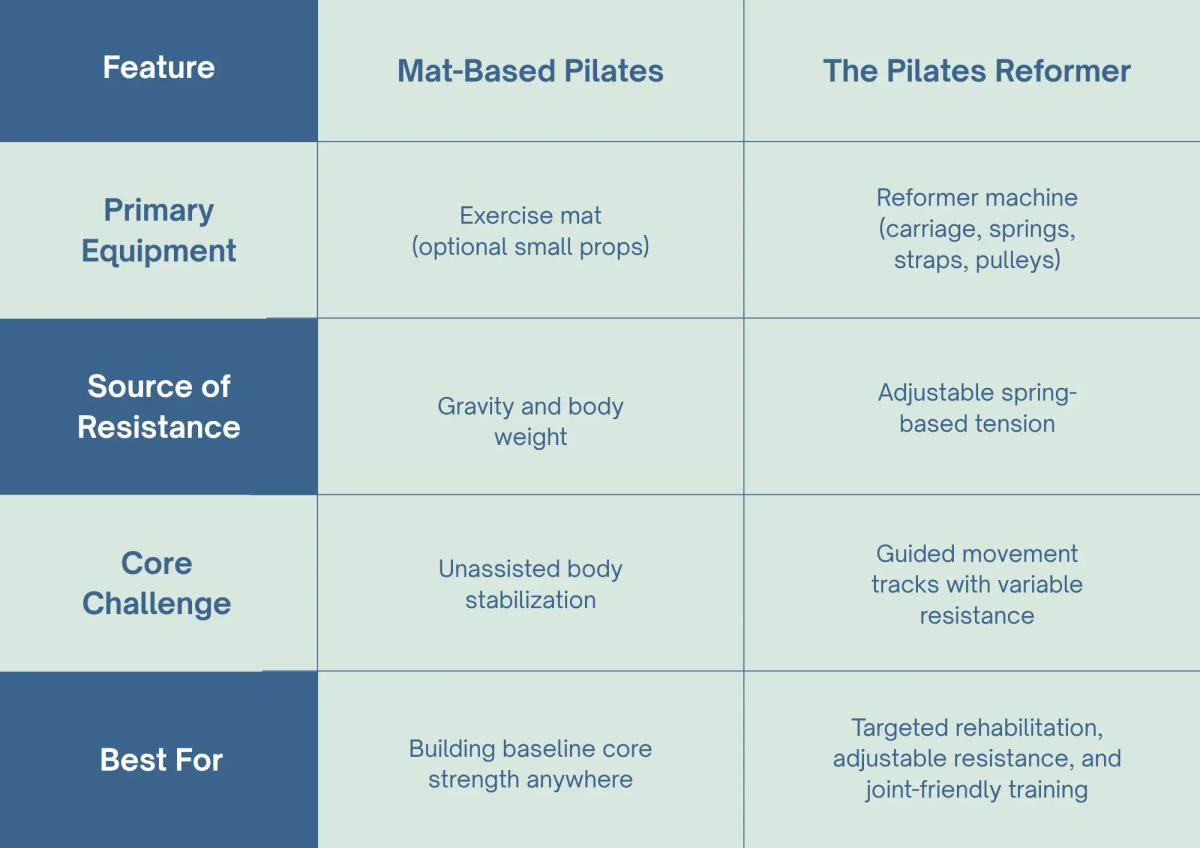
The Pilates Reformer uses a sliding carriage and adjustable springs that can either assist movements for beginners or add resistance for advanced training. Mat Pilates relies on body weight and gravity, requiring high unassisted core control to stabilize the spine.
Frequently Asked Questions About Pilates
Is Pilates for weight loss effective for long-term results?
Yes, Pilates supports long-term weight loss when paired with a balanced diet and regular exercise. While it burns fewer calories per hour than high-intensity cardio, building lean stabilizing muscle boosts metabolic efficiency. Additionally, improving flexibility, balance, and core strength reduces injury risk—helping you stay active and train consistently over time.
How often should I perform a Pilates exercise routine?
Perform a Pilates exercise routine 2 to 3 times per week for 20 to 45 minutes. This schedule provides enough stimulus for your nervous system to build deep core activation while allowing 48 hours of muscular recovery between sessions. With consistent practice, most beginners notice improved posture, core control, and movement efficiency within 6 to 8 weeks.
Can beginners use the Pilates reformer?
Yes, the Pilates Reformer is beginner-friendly when guided by a qualified instructor. Its spring-based carriage can either provide assistance to simplify bodyweight movements or add resistance as strength improves. This adjustable system makes it exceptionally safe for learning proper alignment and mechanics.
What is the biggest benefit of Pilates for someone who lifts weights?
The biggest benefit for weightlifters is improved lumbopelvic stability—maintaining a strong, neutral spine while generating force through the hips and shoulders. Pilates strengthens deep, under-trained core stabilizers (transversus abdominis, multifidus, and pelvic floor) that protect the lower back during heavy compound lifts like squats, deadlifts, and overhead presses.