The 8 best yoga poses for beginners seeking better mobility and active recovery are Cat-Cow, Cobra Stretch, Downward-Facing Dog, Butterfly Pose, Pigeon Pose, Bridge Pose, Child's Pose, and Warrior I. Practicing these fundamental movements for 15 to 20 minutes, 2 to 3 times per week improves joint range of motion, relieves muscle stiffness, and speeds up recovery between strength training sessions.
While lifting weights and cardio challenge your muscles and heart, they can lead to tightness and limited flexibility if recovery is neglected. A regular yoga practice restores balance by enhancing flexibility, improving body awareness, and reducing muscular tension.
Learning these poses at home is an excellent way to begin your yoga journey. However, receiving guidance from a qualified instructor can help you develop proper technique, improve breathing mechanics, and transition safely between poses. For those looking to refine their practice, BeFit gym offers curated yoga sessions, where our professionally guided yoga sessions provide a supportive environment where beginners can build confidence, improve mobility, and enjoy the full physical and mental benefits of yoga practice.
Why Is Active Recovery an Essential Part of a Training System?
Active recovery is a fundamental component of any balanced fitness program. Whether your goal is building muscle, losing fat, or improving athletic performance, your body needs structured recovery between workouts to adapt and grow. Without recovery, fatigue accumulates, movement quality drops, and injury risk increases.
Yoga for beginners provides an accessible way to restore joint mobility and release muscle tension without placing additional physical stress on the body. Unlike high-intensity workouts, yoga emphasizes slow, controlled movements, mindful breathing, and proper alignment.
Key Recovery Benefits of Beginner Yoga:
- Parasympathetic Nervous System Activation: Controlled breathing signals your brain to enter "rest and digest" mode, lowering stress hormones (like cortisol) and promoting muscle tissue repair.
- Enhanced Blood Circulation: Gentle movement increases blood flow to recovering muscles, delivering essential nutrients while flushing out metabolic waste.
- Improved Posture & Alignment: Releasing tight muscles built up from heavy lifting or prolonged sitting restores natural joint alignment.
What Are the 8 Essential Yoga Poses for Beginners?
These eight basic yoga poses have been carefully selected because they target the areas that are most commonly tight from strength training, running, prolonged sitting, and everyday activities; the hips, shoulders, chest, hamstrings, and spine.
For beginners, the goal isn't to stretch as far as possible. Instead, focus on slow, controlled breathing, proper alignment, and moving comfortably within your own range of motion. Hold each pose for 30–60 seconds (unless otherwise stated), breathing deeply and avoiding any sharp pain or discomfort.
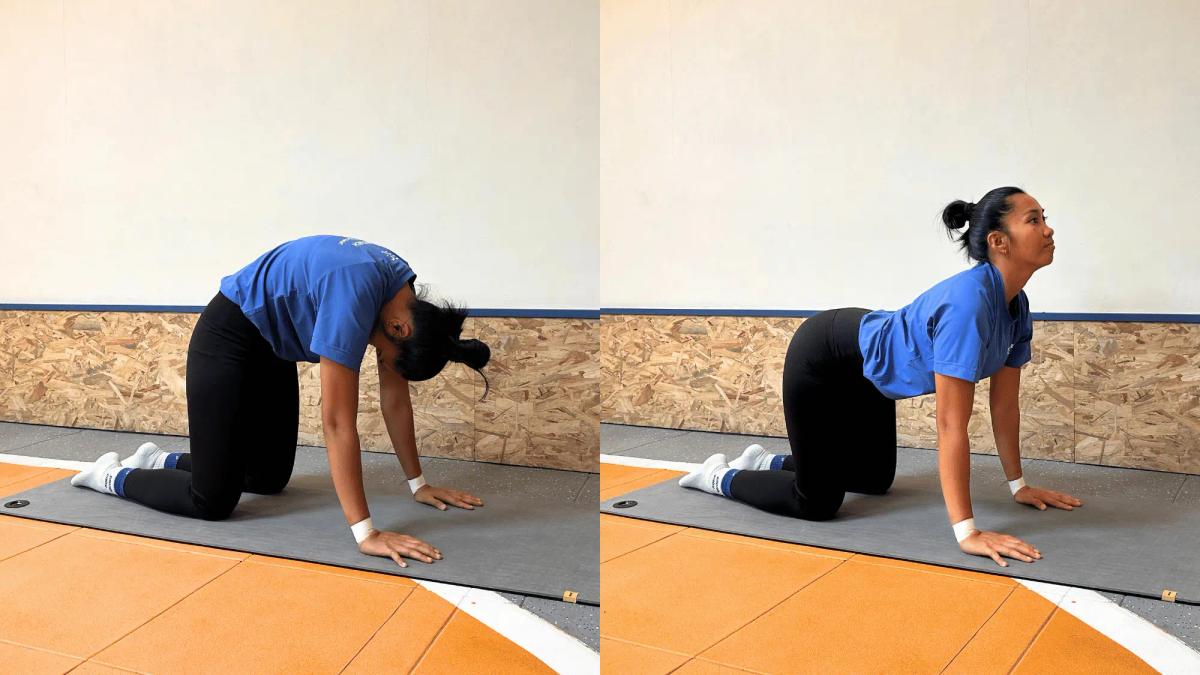
1. Cat and Cow Stretch:
The Cat and Cow Stretch is one of the best mobility exercises for improving spinal movement and warming up the muscles of the back and core. By synchronizing movement with breathing, this gentle flow increases spinal flexibility, improves posture, and prepares the body for both yoga and strength training sessions.
How to Do the Cat and Cow Stretch
Start on your hands and knees with your hands directly under your shoulders and your knees under your hips.
- Inhale as you drop your belly toward the floor, lift your chest, and gently raise your head and tailbone (Cow Pose).
- Exhale as you round your spine toward the ceiling, tuck your chin, and draw your belly button inward (Cat Pose).
- Continue alternating between both positions for 8–10 slow, controlled repetitions, matching each movement to your breathing.
You know your form is correct when:
- Your hands stay directly beneath your shoulders and your knees beneath your hips.
- Your spine moves smoothly from arching to rounding without forcing the movement.
- Your breathing controls the pace of each repetition.
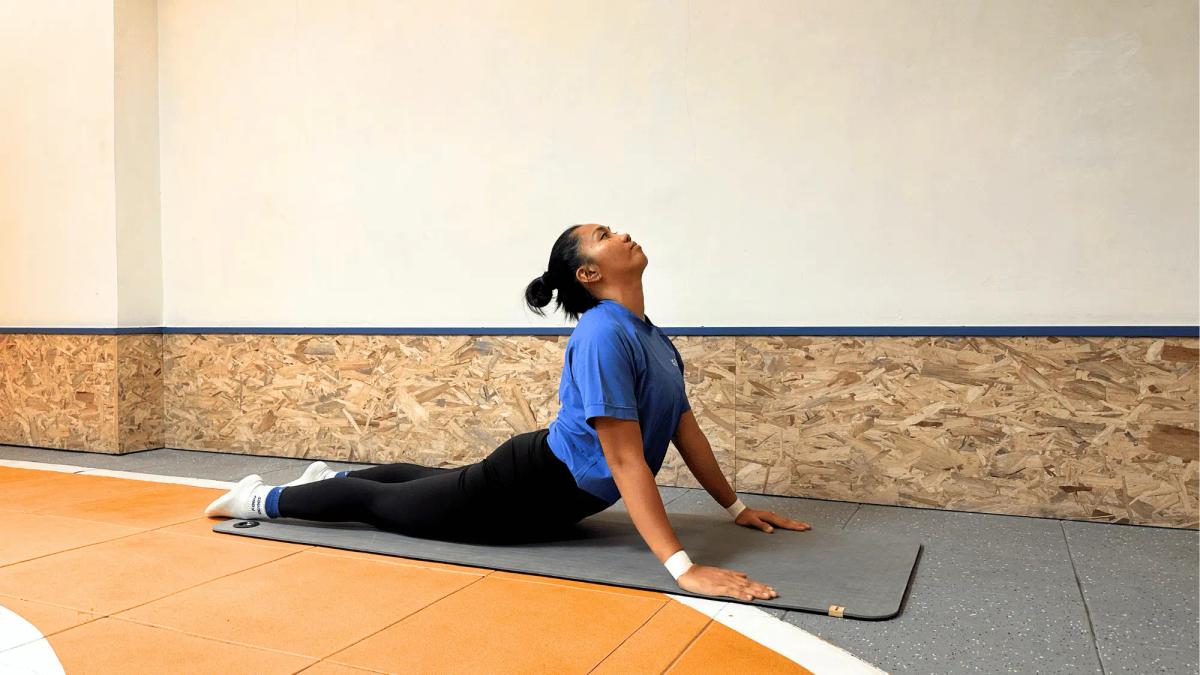
2. Cobra Stretch (Bhujangasana):
The Cobra Stretch (Bhujangasana) is an excellent pose for opening the chest, stretching the abdominal muscles, and improving spinal extension. It helps counteract the rounded posture often caused by desk work, prolonged sitting, and heavy pressing exercises such as bench presses and push-ups.
How to Do the Cobra Stretch
- Lie face down with your legs extended and the tops of your feet resting on the mat. Place your palms beneath your shoulders.
- Press gently into your hands as you lift your head and chest while keeping your pelvis and legs in contact with the floor. Keep your elbows slightly bent and your shoulders relaxed away from your ears.
- Hold the position for 20–30 seconds, breathing slowly and evenly.
You know your form is correct when:
- Your pelvis and legs remain firmly on the mat.
- Your shoulders stay relaxed and away from your ears.
- You feel a comfortable stretch through your chest and abdomen without compressing your lower back.
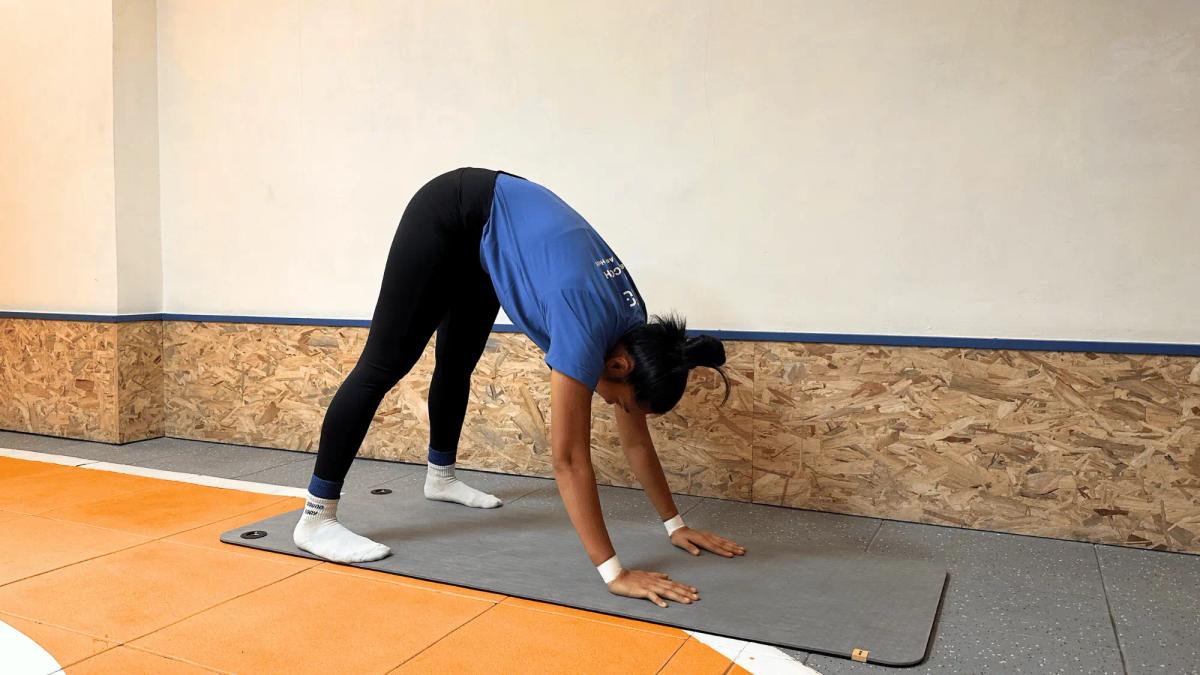
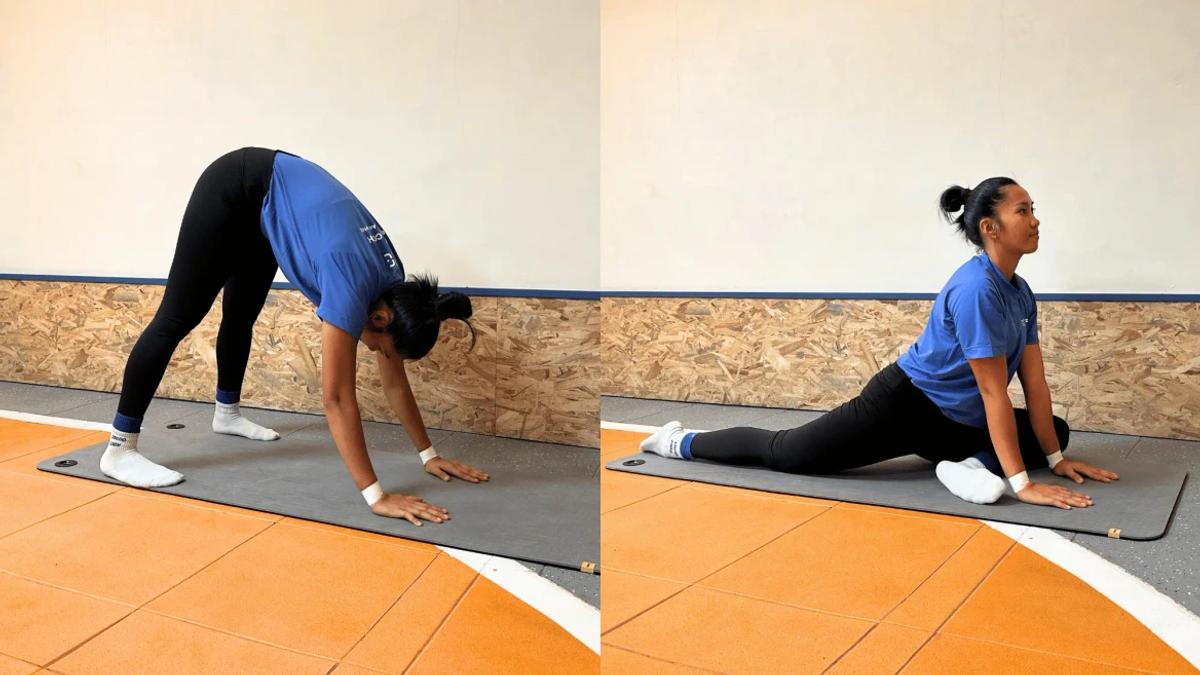
3. Downward-Facing Dog:
Downward Dog is one of the most recognizable yoga poses because it stretches multiple muscle groups simultaneously. It lengthens the hamstrings, calves, shoulders, and back while also strengthening the arms and improving shoulder stability.
How to Do Downward Dog
- Begin on your hands and knees. Tuck your toes under and lift your hips upward, creating an inverted "V" shape with your body.
- Press firmly through your palms, lengthen your spine, and allow your heels to move naturally toward the floor without forcing them down.
- Hold for 30–60 seconds while maintaining slow, steady breathing.
You know your form is correct when:
- Your hips are the highest point of your body.
- Your spine feels long and neutral rather than rounded.
- Your hands press firmly into the floor with your neck completely relaxed.
- You feel a stretch through your hamstrings, calves, shoulders, and upper back.
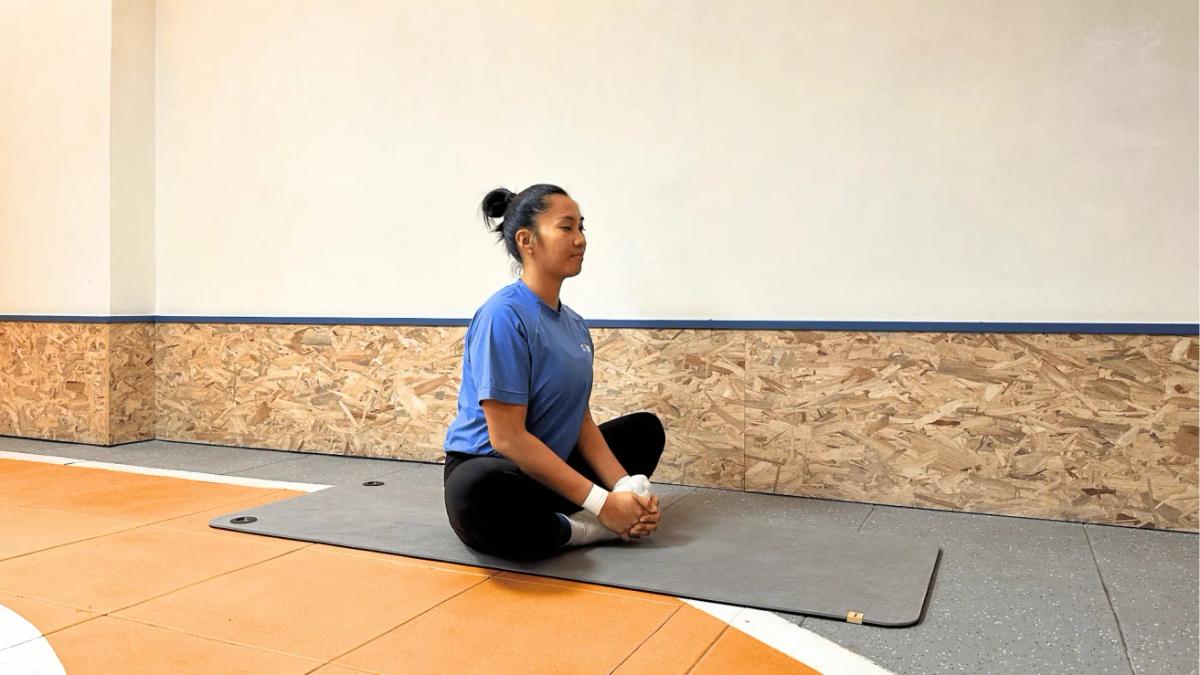
4. Butterfly Pose:
The Butterfly Pose is one of the most effective yoga poses for beginners for improving hip flexibility and opening the inner thighs. It is especially beneficial for people who spend long hours sitting or who struggle with squat depth due to tight hips.
How to Do the Butterfly Pose
- Sit tall with the soles of your feet together and allow your knees to fall comfortably toward the floor.
- Hold your feet or ankles and gently draw your heels toward your body while maintaining an upright posture.
- Hold for 30–60 seconds, breathing deeply and allowing your hips to relax naturally.
You know your form is correct when:
- Your spine remains tall instead of rounded.
- You feel the stretch through your inner thighs and hips rather than your knees.
- Your knees gradually relax closer to the floor without being forced.
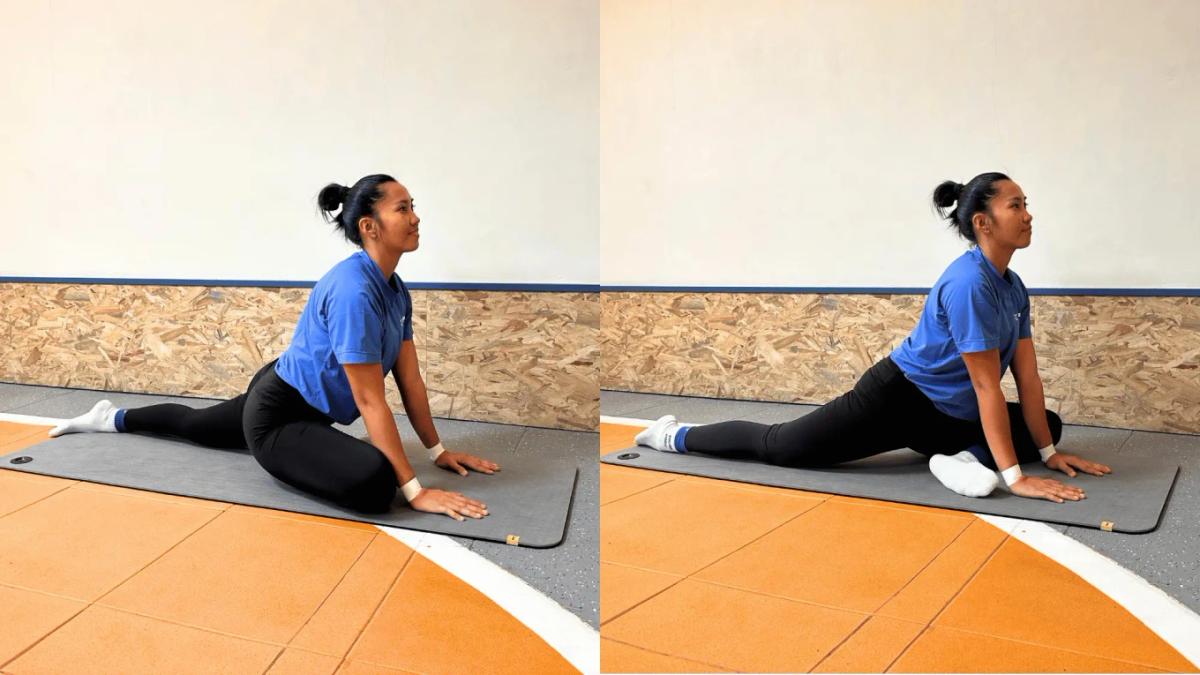
5. Pigeon Pose:
The Pigeon Pose is one of the best deep hip-opening stretches for releasing tension in the glutes, piriformis, and hip flexors. It is particularly beneficial after leg training, running, or cycling when tight hips can limit movement and contribute to lower back discomfort.
How to Do the Pigeon Pose
- From a plank position, perform Pigeon Pose by bringing your right knee toward your right wrist and position your lower leg comfortably across the front of your body.
- Extend your left leg straight behind you and square your hips toward the front of the mat as much as possible.
- Lower your torso over your front leg if comfortable and hold for 45–60 seconds before switching sides.
You know your form is correct when:
- Your back leg stays extended behind you.
- You feel the stretch in your outer hip and glute, not your knee.
- Your torso folds and relaxes over your front leg rather than bracing against the floor.
- Your breathing remains slow and relaxed throughout the stretch.
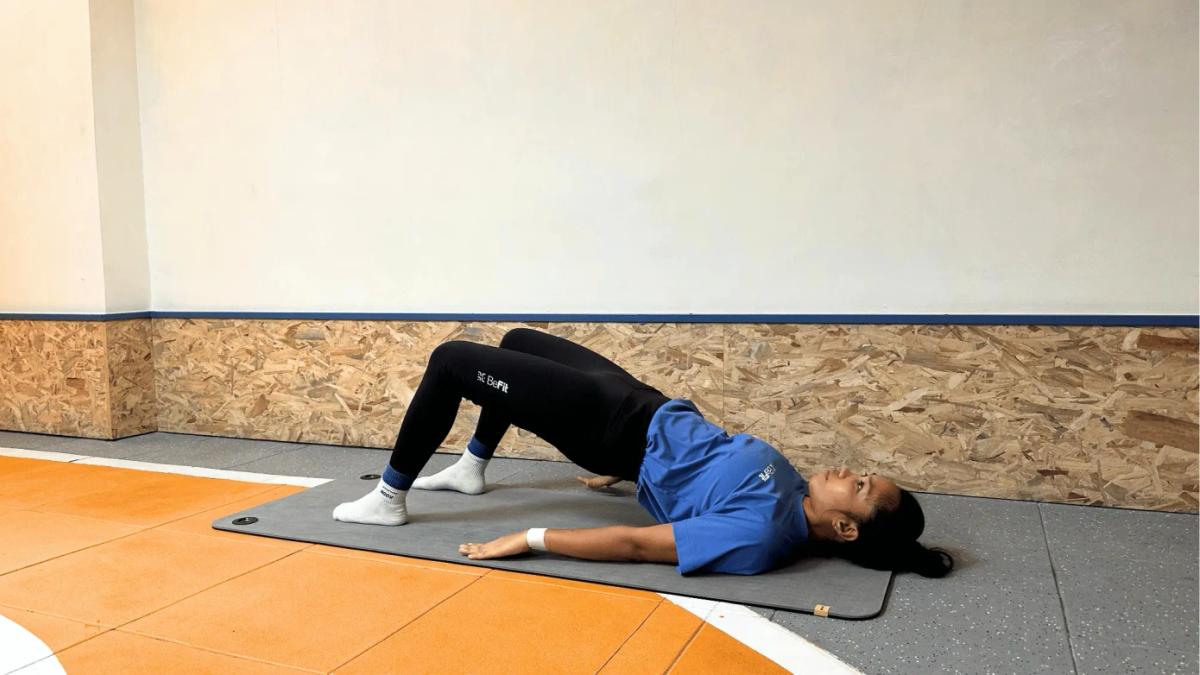
6. Bridge Pose:
Although commonly used as a glute activation exercise, the Bridge Pose is also an excellent yoga movement for strengthening the posterior chain while opening the chest and stretching the front of the hips (hip flexors).
How to Do the Bridge Pose
- To perform Bridge Pose, lie on your back with your knees bent at 90 degrees and your feet flat on the floor about hip-width apart.
- Press through your heels, engage your glutes, and slowly lift your hips until your body forms a straight line from your shoulders to your knees.
- Hold the position for 20–30 seconds before lowering with control.
You know your form is correct when:
- Your feet stay flat on the floor and your knees remain aligned over your feet.
- Your hips stay lifted without over-arching and keeping your weight on your upper back rather than your neck.
- You feel your glutes and hamstrings working while your chest opens comfortably.
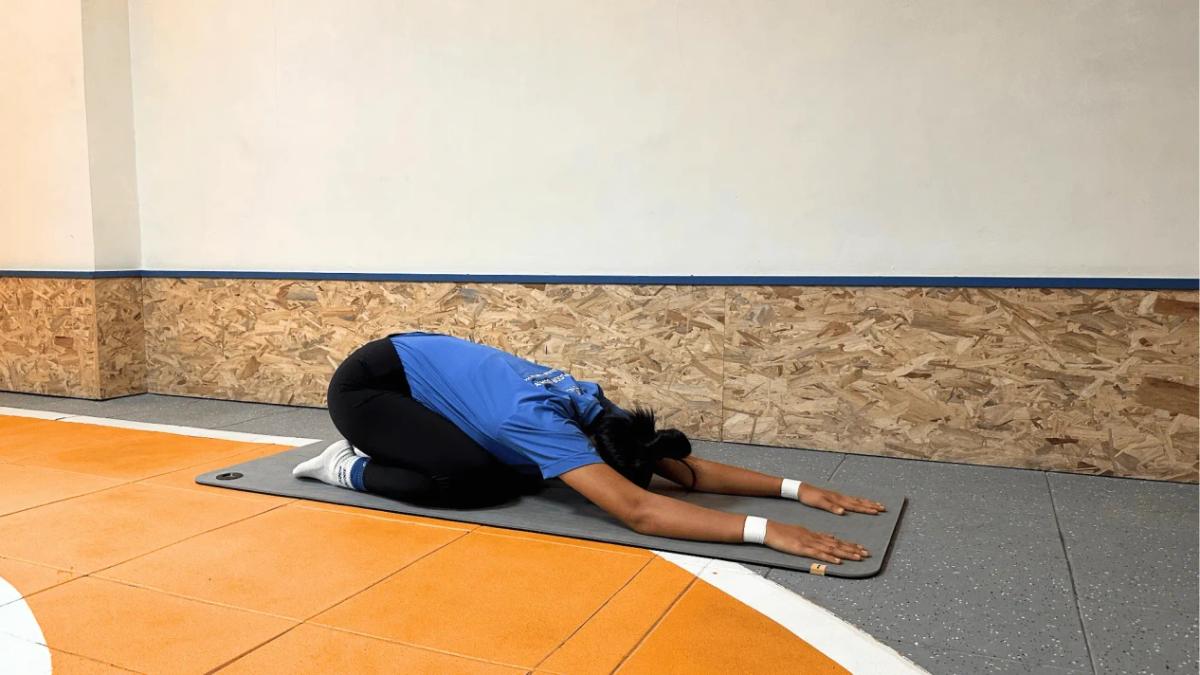
7. Child’s Pose:
Child's Pose is one of the most restorative yoga positions and an excellent way to finish a workout or yoga session. It gently stretches the lower back, hips, shoulders, and upper back while promoting relaxation and controlled breathing.
How to Do Child's Pose
- Kneel on the mat with your big toes touching and your knees comfortably apart.
- Sit your hips back toward your heels, extend your arms forward, and lower your chest and forehead toward the floor.
- Hold the pose for 45–90 seconds, focusing on slow, deep breathing.
You know your form is correct when:
- Your hips comfortably move toward your heels with your forehead resting comfortably on the floor.
- Your arms remain fully extended without tension in your shoulders creating a gentle stretch through your upper back.
- You feel a gentle release across your lower back, upper back, hips, and thighs.
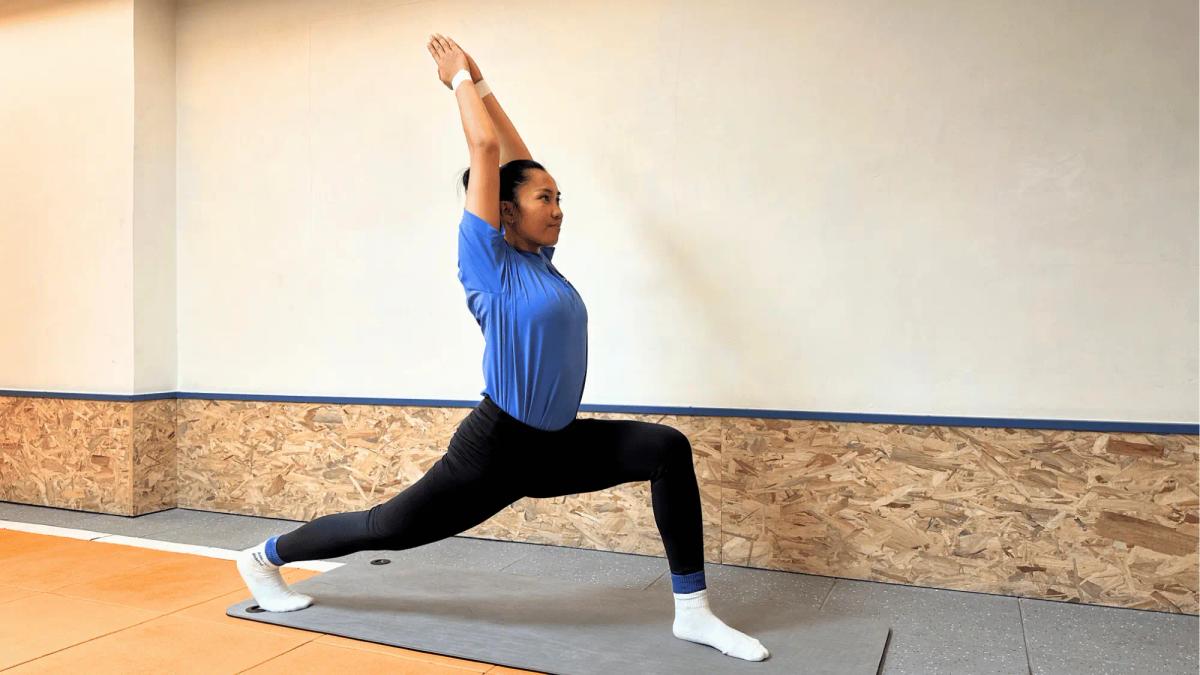
8. Warrior I:
Warrior I is a foundational standing pose that develops lower-body strength, improves balance, and stretches the hip flexors while promoting stability through the core and shoulders.
How to Do Warrior I
- Step one foot back approximately 3–4 feet and turn it outward about 45 degrees.
- Bend your front knee until it is directly above your ankle while keeping your back leg straight.
- Square your hips toward the front, lift your arms overhead, and hold for 30–45 seconds before repeating on the opposite side.
You know your form is correct when:
- Your front knee is bent directly over your ankle while your hips face squarely forward.
- Your back leg stays completely straight with the outer edge of your foot pressed flat into the floor.
- Your arms reach overhead with your shoulders relaxed, feeling a deep stretch along the front hip of your back leg.
How a Consistent Yoga Practice Supports Gym Performance
The benefits of yoga extend beyond basic flexibility. Practicing yoga poses regularly improves proprioception—your brain's ability to sense your body's position in space. Better proprioception enhances control during complex strength lifts like squats, deadlifts, and overhead presses.
Additionally, increased joint mobility allows your muscles to move through full ranges of motion, generating power more efficiently. Practicing yoga for 15 to 20 minutes, 2 to 3 times per week is enough to maintain joint health, reduce post-workout soreness (DOMS), and keep your training on track.
Frequently Asked Questions About Yoga Poses
How long should I hold each of the basic yoga poses?
Hold basic yoga poses for 30 to 60 seconds when aiming to improve mobility, flexibility, and active recovery. This duration gives your muscles and connective tissues sufficient time to gradually relax, allowing you to expand your range of motion without forcing the stretch.
Remaining in a stretch with slow, controlled breathing helps quiet your nervous system’s natural protective response—known as the stretch reflex—which allows targeted muscles to release deep tension. Over time, consistent 30-to-60-second holds lead to lasting improvements in flexibility, joint mobility, and overall movement quality.
- Holds under 20 seconds: Best suited for dynamic mobility warm-ups to increase blood flow before exercise, though less effective for long-term flexibility gains.
- Holds of 30 to 60 seconds (or longer): Best suited for post-workout recovery sessions when muscles are warm and receptive to deep stretching.
Can I do yoga poses for beginners on my rest days?
Yes, practicing yoga poses for beginners on rest days is one of the most effective ways to support active recovery without adding extra stress to your body. Unlike heavy strength training or high-intensity cardio, gentle yoga keeps you moving while actively encouraging tissue repair.
A 20 to 30-minute session of basic yoga poses offers significant recovery benefits:
- Increases Blood Circulation: Delivers fresh oxygen and vital nutrients to recovering muscle tissue while assisting in the removal of metabolic by-products built up during hard workouts.
- Relieves Post-Workout Stiffness: Prevents joint tightness that typically develops after heavy lifting, running, or prolonged sitting.
- Improves Gym Movement Quality: Maintaining regular joint range of motion makes compound movements—like squats, deadlifts, overhead presses, and lunges—feel smoother and more comfortable.
Do I need to be flexible to start doing yoga poses?
No, you do not need to be flexible to start practicing yoga poses—flexibility is the result of a regular practice, not a requirement. Yoga is designed to meet you at your current level and gradually build mobility, balance, body awareness, and flexibility over time.
The goal of beginner yoga is not to force a perfect pose, but to move safely within your current comfortable range of motion. All basic yoga poses can be easily adapted to your body using supportive props:
- Yoga Blocks & Cushions: Bring the floor closer to you, reducing strain on tight hamstrings or hips.
- Straps & Folded Towels: Help bridge the gap during stretches if you cannot reach your feet or hands comfortably.
- Resistance Bands: Provide extra support and alignment control during deep hip or shoulder openers.
Should I do yoga before or after my gym workout?
Perform short dynamic yoga movements before your workout to prepare for exercise, and save longer static yoga holds for after your workout to boost flexibility and recovery.
Before Strength Training (Pre-Workout Dynamic Warm-Up)
Prior to lifting, your goal is to activate muscles rather than hold long stretches. Long static stretches before heavy lifting can temporarily decrease peak muscle power and explosive force during exercises like squats or bench presses. Instead, spend 5 to 10 minutes on dynamic movements:
- Cat and Cow Stretch: Mobilizes the spine and warms up core muscles.
- Downward Dog (Pedaling Heels): Loosens calves, ankles, and hamstrings dynamically.
- Active Low Lunges: Opens the hip flexors for better squat depth.
- Controlled Shoulder Reaches: Prepares the upper body and thoracic spine for pressing.
After Strength Training or on Rest Days (Post-Workout Recovery)
After training—when muscles are warm and pliable—spend 15 to 20 minutes on longer static holds to reduce muscle tightness and kick-start recovery. Focus on restorative poses such as:
- Pigeon Pose & Butterfly Pose: To release outer hip and inner thigh tightness.
- Child's Pose & Cobra Stretch: To relieve back tension and open the chest.